
You ran a full route scan across 40 airlines last night. By morning, half the requests had failed. Akamai flagged your IPs, Cloudflare threw CAPTCHAs at every session, and your fare database went stale before breakfast.
That is what happens when you try to scrape travel fare aggregation data without the right proxy infrastructure. Airlines and OTAs change prices multiple times per hour, and their anti-bot systems are some of the most aggressive on the web.
I have spent months testing proxy setups against platforms like Google Flights, Skyscanner, Expedia, and direct airline portals. The eight providers below are the ones that actually held up under sustained travel scraping loads. Here is a quick look before the deep reviews.
🧐 What Are Travel Fare Aggregation Proxies and Why Do They Matter?
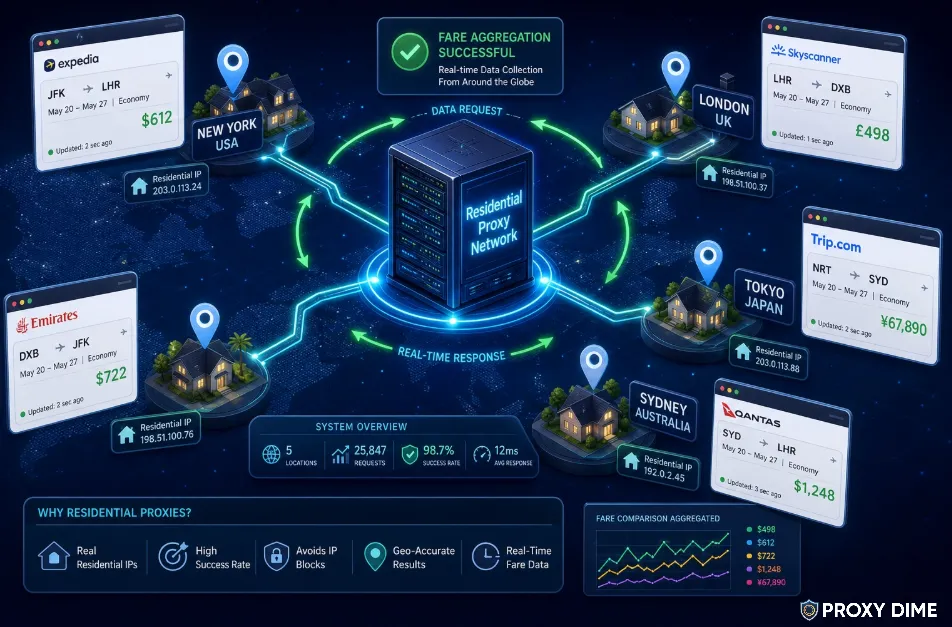
Travel fare aggregation proxies are proxy servers configured to route automated requests through real residential or ISP addresses so that airline and hotel websites treat your scraper like a genuine traveller. They mask the origin of your data collection pipeline and rotate IPs to avoid detection.
Here is why they matter. Platforms like Skyscanner, Google Flights, and Expedia use sophisticated bot detection from vendors like Akamai and Cloudflare. These systems block roughly 47% of automated traffic by default. Without proxies, your fare scraper gets rate limited or banned within minutes. That means stale prices, incomplete route data, and lost revenue for your comparison platform.
Geo-targeting is the other critical factor. Airlines display different fares depending on the visitor's location. A New York IP might see $1,250 for a JFK to London flight while a Madrid IP shows the equivalent of $780 for the same seat. Residential proxies let you view prices from any country, giving you the complete picture across markets.
Quick Tip: For travel fare aggregation, residential proxies typically outperform datacenter proxies because airline anti-bot systems trust IPs from real user devices. Prioritise providers offering city-level geo-targeting and automatic IP rotation for sustained route scanning.
For cleaner fare data, fewer bans, and sharper geo-pricing checks, start with residential proxies over datacenter proxies when building a serious travel fare aggregation stack.
🔥 8 Best Travel Fare Aggregation Proxies Feature Comparison 2026
| Proxy Provider | Proxy Types Available | Total IP Pool Size |
|---|---|---|
| Decodo | Residential, datacenter, ISP | 115M+ |
| Bright Data | Residential, datacenter, ISP, mobile | 72M+ |
| Thordata | Residential, datacenter, ISP, mobile | 60M+ |
| Oxylabs | Residential, datacenter, ISP, mobile | 175M+ |
| Webshare | Residential, datacenter, ISP | 80M+ |
| ZenRows | Residential, scraping API | Not disclosed |
| Proxy-Seller | Residential, datacenter, mobile | 220+ countries |
| NetNut | Static residential, rotating, datacenter | ISP-partnered network |
1. Decodo
Decodo brings 115 million residential IPs from real user devices to the table, and that pool was practically built for travel fare scraping at scale. You get automatic IP rotation for every search query, which is exactly what you need when scanning thousands of routes across Google Flights and Expedia without tripping anti-bot alarms.
Sticky sessions are available too, so multi-step fare validation flows stay on the same IP until the data comes back complete. Geo-targeting covers 195 locations down to ZIP code level, which means you can pull localised fares from nearly anywhere on the planet. Travel startups building flight search engines or running aggregator backends will find the setup straightforward.
Pricing: Residential proxies start from $2.75/GB on the 100GB plan. Pay-as-you-go available at $4/GB. 3-day free trial included.
Pros
Cons
Why Decodo for Travel Fare Aggregation: The 115M+ residential pool combined with ZIP code targeting means you can pull fare data from specific airports and local markets without triggering CAPTCHAs. The 3-day free trial lets you validate success rates against your target OTAs before committing budget.
2. Bright Data
Bright Data is the platform that travel companies like Railofy already use in production for collecting flight pricing data at enterprise scale. Their 72 million residential IPs spread across every major country give you the geographic depth that fare aggregation demands.
The Web Unlocker API handles the hard part automatically. It solves CAPTCHAs, manages fingerprinting, and rotates IPs without any manual configuration on your end. That saves engineering hours when you are running pipelines against heavily protected sites like Emirates or Lufthansa. For teams collecting hundreds of thousands of fare quotes daily, the infrastructure here is battle-tested.
Pricing: Residential proxies from $5.04/GB on the Micro plan. Pay-as-you-go at $8.40/GB. Free trial available.
Pros
Cons
Why Bright Data for Travel Fare Aggregation: The Web Unlocker API is the real differentiator. Instead of building custom anti-detection logic for each airline site, you pass the URL and get clean fare data back. For teams scraping 50+ airline portals simultaneously, this approach scales without constant maintenance.
3. Thordata
Thordata offers one of the lowest entry points for travel fare scraping with residential bandwidth starting at $0.65/GB. That pricing makes a significant difference when your aggregator is pulling fares across thousands of routes daily and bandwidth costs are the biggest line item.
The pool covers over 60 million residential IPs across 195 countries, which handles the geographic spread that fare comparison platforms need. Both sticky and rotating sessions are supported, so you can rotate IPs per request during broad scans and hold sessions during multi-page booking flows. Budget-conscious teams building travel comparison tools will stretch their money further here than anywhere else on this list.
Get 40% OFF Thordata Proxy Plans Today
Use coupon code AFFMAVEN to get 40% OFF on Thordata proxies. A smart deal for travel aggregators, booking tools, and price comparison platforms that need reliable global IP coverage.
With Special Code 🎁
Pricing: Residential from $0.65/GB. Unlimited residential plans from $69/day. Free trial available for new accounts.
Pros
Cons
Why Thordata for Travel Fare Aggregation: When your cost model depends on scraping millions of fare data points monthly, the $0.65/GB starting price changes the economics entirely. The unlimited daily plan at $69/day is particularly useful during peak travel seasons when fare fluctuations increase and scan frequency needs to double.
4. Oxylabs
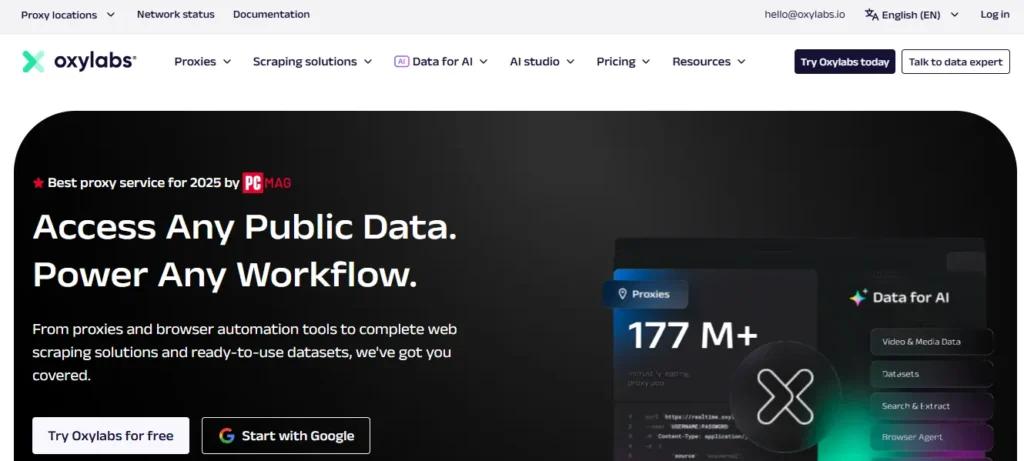
Oxylabs controls the largest verified residential proxy pool in the industry at 175 million IPs, and that sheer volume translates directly into sustained success rates when scraping airline and OTA platforms. For travel fare aggregation, pool size matters because sites like Skyscanner and Booking.com fingerprint and burn IPs fast.
More IPs mean longer runs without degradation. City-level targeting across 195 locations lets you capture the exact localised fares that travellers in specific markets would see. Their zero CAPTCHA guarantee on residential proxies eliminates one of the biggest bottlenecks in travel data pipelines. Enterprise aggregator teams running multi-market operations will find the reliability here worth the premium.
Oxylabs 50% Discount for Travel Fare Scraping
Use OXYLABS50 to get 50% off Oxylabs residential proxies. Ideal for travel fare scraping, it provides city-level targeting, unlimited concurrent sessions, and fewer CAPTCHA issues at half the cost.

With Special Code 🎁
Pricing: Residential proxies from $8/GB on the Basic plan. Use coupon code OXYLABS50 for 50% off, bringing it to $4/GB. 7-day free trial available.
Pros
Cons
Why Oxylabs for Travel Fare Aggregation: The 175M residential pool means your scraper can hit Google Flights, Expedia, and 30 airline portals simultaneously without running into the same IP twice in a session. That is the kind of scale where zero CAPTCHA guarantees actually hold up.
5. Webshare
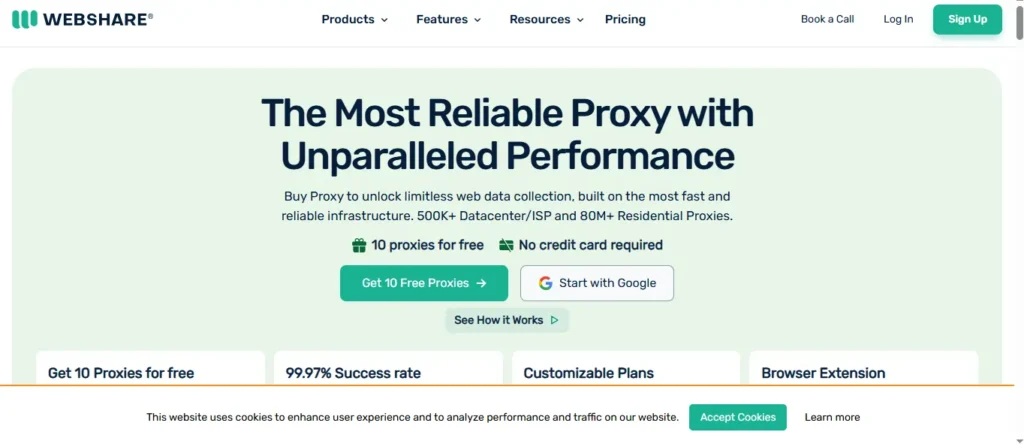
Webshare is the most accessible entry point for travel fare aggregation projects, thanks to a genuine free tier that gives you 10 proxies and 1GB of bandwidth with no credit card required. The residential pool has grown to over 80 million IPs across 195 countries, which is more than adequate for mid-scale fare comparison platforms.
Pricing drops significantly with volume. At 100GB, you pay just $2.25/GB for residential bandwidth. The dashboard is clean and straightforward, so solo developers building travel affiliate sites or niche fare comparison tools can get scraping within minutes.
Pricing: Residential from $3.50/GB for 1GB. Drops to $2.25/GB at 100GB and $1.50/GB at 1,000GB. Free tier available.
Pros
Cons
6. ZenRows
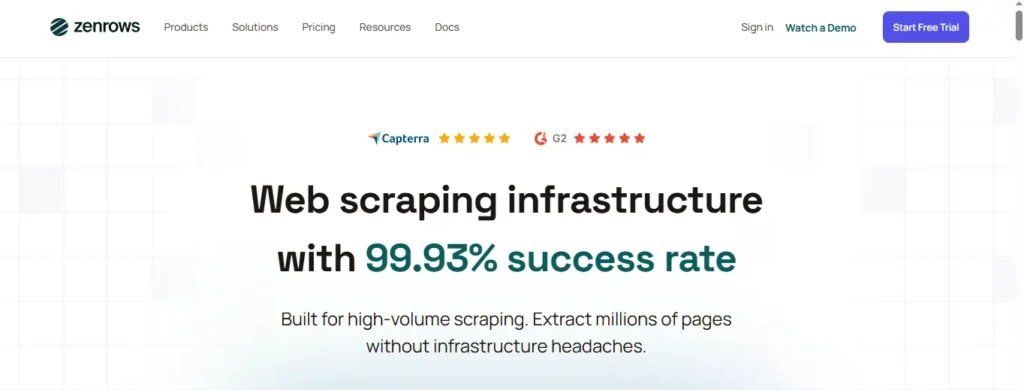
ZenRows takes a different approach to travel fare aggregation by combining proxy infrastructure with a full scraping toolkit. Instead of just providing IPs, the Universal Scraper API handles JavaScript rendering, anti-bot bypass, and automatic retries in a single request.
That matters because modern OTAs like Expedia and Kayak load fare data dynamically through JavaScript, and a raw proxy connection returns empty pages without a headless browser. The Scraping Browser product renders these pages properly while routing through residential IPs. Development teams that want to skip building their own anti-detection stack will save significant time here.
Pricing: Plans start at $69/month (Developer) with residential bandwidth at $5.5/GB. Business plans from $299/month at $5/GB. Free trial available.
Pros
Cons
7. Proxy-Seller
Proxy-Seller stands out for travel fare aggregation teams that need dedicated IPs rather than shared rotating pools. You can buy as few as one proxy, which is unusual in this market and useful when testing specific geo-locations for fare accuracy.
Their residential bandwidth runs at $3.50/GB on pay-as-you-go, positioning them competitively against mid-range providers. Coverage spans 220 countries, which is broader than most competitors and helpful when aggregating fares from regional carriers in less common markets. Small agencies running fare comparison projects for specific corridors will appreciate the granular purchasing flexibility.
Pricing: Residential from $1.99/500MB. Pay-as-you-go at $3.50/GB. Datacenter proxies from $0.82/IP per month.
Pros
Cons
8. NetNut
NetNut specialises in static residential (ISP) proxies, and that proxy type fits a specific travel fare aggregation workflow perfectly. When you need a stable IP that stays active for hours while monitoring fare changes on a specific route, rotating residential connections create unnecessary noise.
NetNut's static IPs hold sessions reliably for extended monitoring windows. Their network pulls directly from ISP partnerships, which gives the IPs a higher trust score than standard residential addresses on platforms like Booking.com and airline direct sites. Teams running continuous fare monitoring rather than burst scans will get the most value here.
Get 20% Off Static Residential Proxies
Claim 20% off NetNut using AFFCOUPON20 and use trusted ISP-level proxies for cleaner, longer, and more reliable fare monitoring sessions.

Use Code 🎁
Pricing: Contact for current residential pricing. Use coupon code AFFCOUPON20 for 20% off your plan.
Pros
Cons
⚡ How to Choose the Right Proxies for Travel Fare Aggregation
1. Proxy Type Selection
Residential proxies are the clear winner for travel fare aggregation. Airlines and OTAs use advanced bot detection that easily identifies datacenter IP ranges. Residential IPs from real user devices pass these checks naturally.
ISP proxies work well for continuous monitoring of specific routes where session stability matters more than rotation. Use datacenter proxies only for less protected targets where speed is the priority.
2. Geographic Coverage
Travel fares are inherently location dependent. A proxy provider with city-level targeting lets you see the exact prices displayed to travellers in New York, London, or Tokyo. This matters because the same flight can cost 38% less when viewed from a different country. Prioritise providers covering at least 195 countries with city-level precision.
3. Speed and Response Time
Fare data goes stale fast. Airlines adjust prices multiple times per hour, so your proxy infrastructure needs to support sustained high-frequency requests without latency spikes. Look for providers offering sub-100ms average response times and high concurrency limits. A slow proxy means your aggregator displays yesterday's prices.
4. Rotation and Session Control
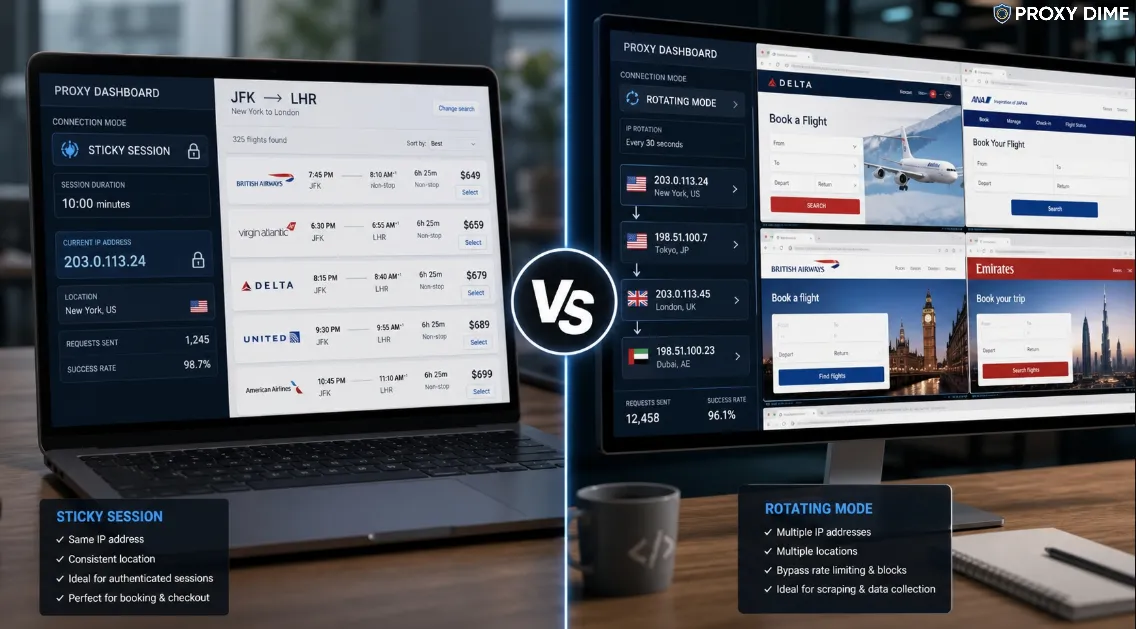
Broad route scanning requires aggressive IP rotation. Every request to Skyscanner or Google Flights should ideally come from a different IP. But multi-step fare validation, where you search, select, and confirm pricing, needs a sticky session that holds the same IP through the entire flow. The best providers offer both modes with easy switching.
5. Pricing and Value
Travel fare aggregation is a bandwidth-heavy operation. If you are scanning 10,000 routes daily, costs add up quickly. Compare per-GB rates at your expected volume, not just the starting price. Providers like Thordata and Webshare offer steep volume discounts that make sustained operation viable. Free trials from Decodo, Bright Data, and Oxylabs let you benchmark success rates before committing budget.

More Guides On Proxy Dime
🎯 Final Thoughts
For most travel fare aggregation setups, Decodo offers the best balance of pool size, geo-targeting precision, and pricing with residential bandwidth from $2.75/GB. Bright Data is worth the premium for enterprise teams that need the Web Unlocker API to handle heavy anti-bot systems automatically.
Thordata makes high-volume fare scraping viable on a tight budget at $0.65/GB. Each of these providers offers a free trial, so test against your specific target sites before locking in a plan. The right proxy setup turns unreliable fare data into a competitive advantage that compounds over time.