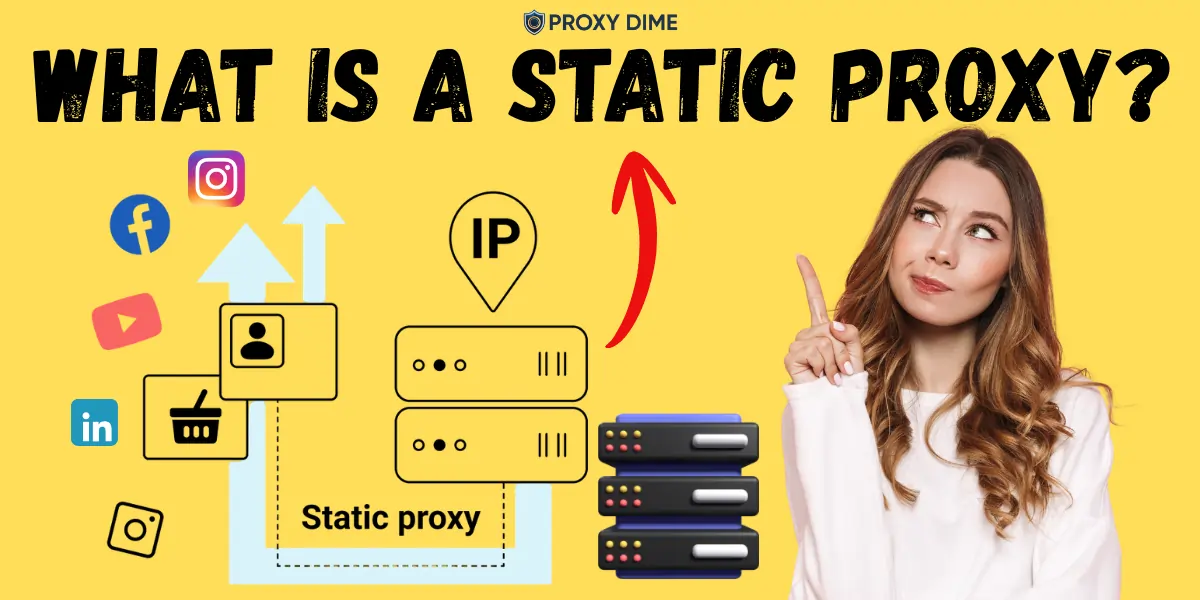
A static proxy is a proxy server that assigns you a single, dedicated IP address that remains fixed across every session and request — it never rotates, never changes, and is exclusively yours for as long as your subscription is active.
This stands in direct contrast to rotating proxies, which cycle through different IPs with each request or session. Static proxies exist because many online platforms actively monitor IP consistency as a trust signal: a user who always connects from the same IP looks like a real person; one who connects from a different IP every time triggers fraud and automation alerts.
The defining characteristic of a static proxy is not just that the IP doesn't change — it's that the IP belongs exclusively to you. Shared rotating proxies may occasionally assign you the same IP twice, but that IP is also used by other customers. A true static proxy means no other user ever touches your dedicated IP, protecting your IP reputation from contamination by others' activities.
Static Proxy vs Rotating Proxy: Core Difference
| Feature | Static Proxy | Rotating Proxy |
|---|---|---|
| IP Assignment | Fixed — same IP every time | Changes per request or session |
| IP Exclusivity | Dedicated to one user | Shared across the pool |
| Session Continuity | Full — no breaks | Variable — rotation breaks sessions |
| Account Trust Score | Builds over time (consistent IP) | Cannot build — IP always new |
| Login Cookie Retention | Persists across sessions | Lost on rotation |
| Anti-Fraud Detection Risk | Lower — consistent behavior | Higher — IP changes trigger flags |
| Best For | Account management, payments, streaming | Scraping, price monitoring |
| Cost Model | Per IP/month ($2–$15) | Per GB ($2–$15) or per IP |
| IP Pool Size | Single dedicated IP | Millions of IPs |
Types of Static Proxies
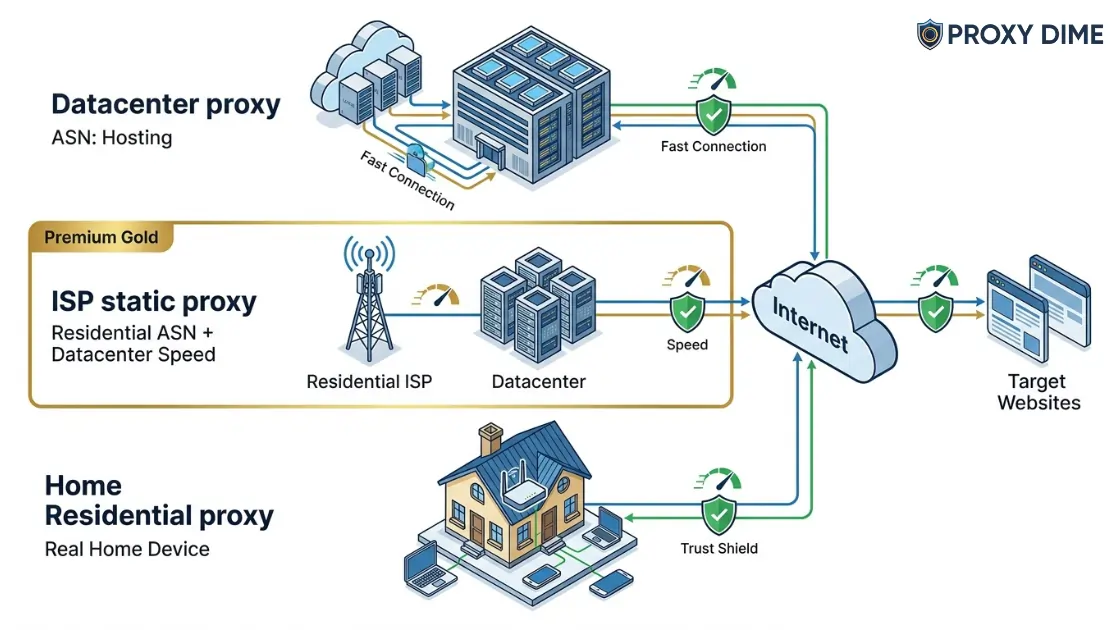
Static proxies are available in three main IP-origin variants, each with distinct trust characteristics:
Why Session Continuity Matters: The Technical Reason
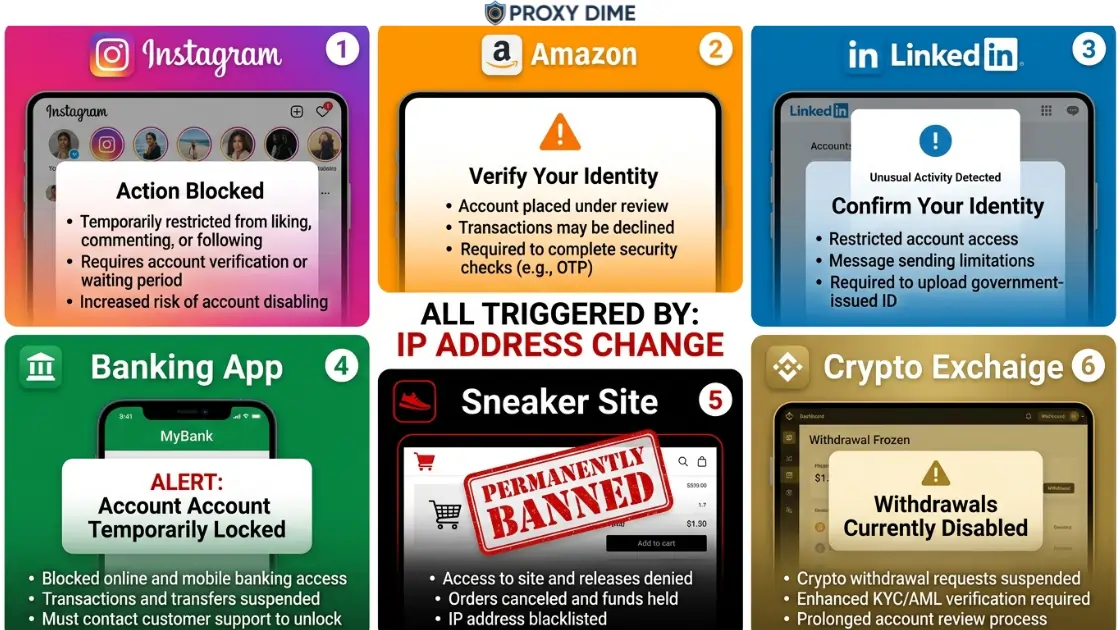
Platforms like Instagram, Amazon, LinkedIn, and banking sites use session tokens tied to your IP address as part of their authentication and fraud-prevention systems.
When your IP changes mid-session or between login sessions, the platform detects an anomaly: the same account is suddenly appearing from a different geolocation or ASN. This triggers:
A static proxy eliminates all of these triggers by presenting a consistent IP identity on every connection — exactly like a real user always browsing from their home internet.
When You Need a Static Proxy vs a Rotating Proxy
| Use Case | Static Proxy | Rotating Proxy |
|---|---|---|
| Social media account management | Required | Will trigger bans |
| E-commerce seller accounts (Amazon, eBay) | Required | Will trigger verification |
| Streaming services (Netflix, Hulu) | Recommended | Frequent disconnects |
| Payment processing (Stripe, PayPal) | Required | Flagged as fraud |
| Web scraping (large-scale data collection) | Not needed | Best choice |
| Price monitoring (100+ pages/session) | Not needed | Best choice |
| SEO rank tracking (same geo every time) | Recommended | Acceptable |
| Ad verification | Acceptable | Better for multi-geo |
IP Warm-Up: Building Trust on a Static Proxy
When you first obtain a static proxy IP, it starts with a neutral or unknown reputation. For account management use cases, a ‘warm-up' period is recommended: browse normally, interact casually with the platform, and avoid aggressive automated activity for the first 24–48 hours.
This allows the platform's behavioral systems to assign the IP a positive trust score before you begin more intensive operations. A warmed-up static IP dramatically reduces 2FA triggers and flag rates on social media platforms.