You ran a scraping job overnight, woke up, and found 90% of your requests had failed. CAPTCHAs. Blocks. Entire subnets blacklisted. That is the reality of using residential proxies from providers who oversell their pools and underdeliver on quality.
According to Proxyway's 2026 benchmark, residential proxy success rates across providers ranged from 51% to over 99%, which means your choice of residential proxy provider matters more than your scraping script.
I have tested, configured, and benchmarked over two dozen proxy services across web scraping, ad verification, SEO monitoring, price aggregation, and social media management. This list reflects what actually works in production, not marketing claims. Below are 10 residential proxy providers that earned their spot through real performance data, honest pricing, and reliable uptime.
🧐 What Are Residential Proxies and Why Do They Matter?
Residential proxies route your internet requests through real IP addresses assigned by Internet Service Providers to actual home devices. When a target website sees your request, it looks like it came from a regular household, not a data centre or cloud server.
That distinction matters because websites have gotten significantly better at detecting and blocking non-residential traffic. Cloudflare, PerimeterX, and DataDome all fingerprint incoming connections. Datacenter IPs get flagged almost immediately on protected sites. Residential IPs pass those checks because they are technically legitimate.
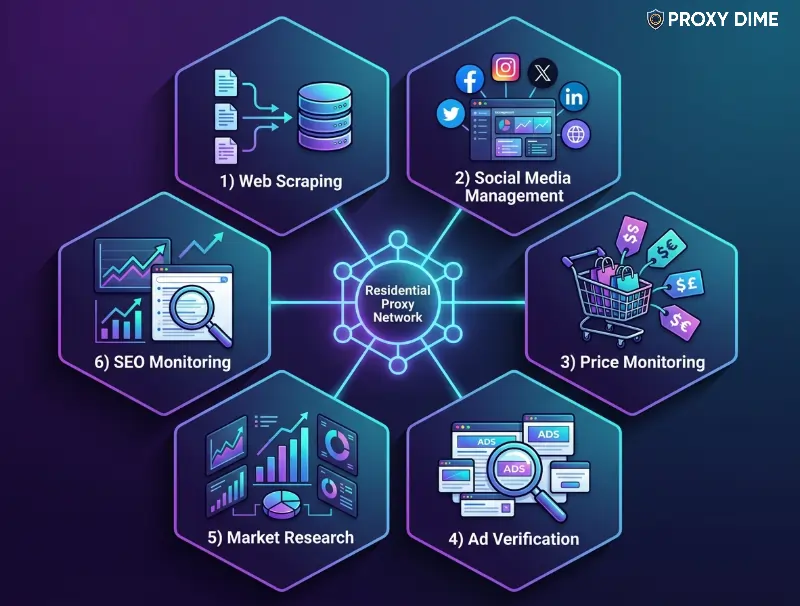
For web scraping, this means higher success rates on targets like Amazon, Google, LinkedIn, and real estate platforms. For social media automation, residential IPs reduce account bans. For ad verification, they let you see the actual ads served to real users in specific locations. For price monitoring, they prevent websites from serving you decoy pricing.
The trade-off is cost. Residential proxies run anywhere from $1 to $15 per GB depending on the provider and volume, while datacenter proxies sit below $1 per GB. You pay more, but you get through.
Quick Tip: For most web scraping and automation tasks, rotating residential proxies outperform datacenter proxies because target sites trust real ISP addresses. Prioritise providers offering granular geo-targeting and flexible rotation settings for your specific workflow.
🔥 Best Residential Proxy Providers 2026 Reviewed
| Proxy Provider | Primary Strength | Ideal User |
|---|---|---|
| Decodo | Best value per GB | Mid-scale scraping teams |
| Oxylabs | Largest verified IP pool | Enterprise data pipelines |
| Webshare | Free tier with 10 proxies | Budget-conscious beginners |
| Bright Data | Deepest geo-targeting options | Geo-restricted data collection |
| IPRoyal | Simple pay-as-you-go model | Freelance scrapers |
| SOAX | Ethically sourced 155M pool | Compliance-focused businesses |
| DataImpulse | $1/GB no-subscription pricing | Cost-sensitive bulk scraping |
| NetNut | Ultra-stable long sessions | Market research analysts |
| Geonode | $0.50/GB membership option | High-volume data operations |
| NodeMaven | IP quality filtering | Anti-detect browser users |
1. Decodo (Formerly Smartproxy)
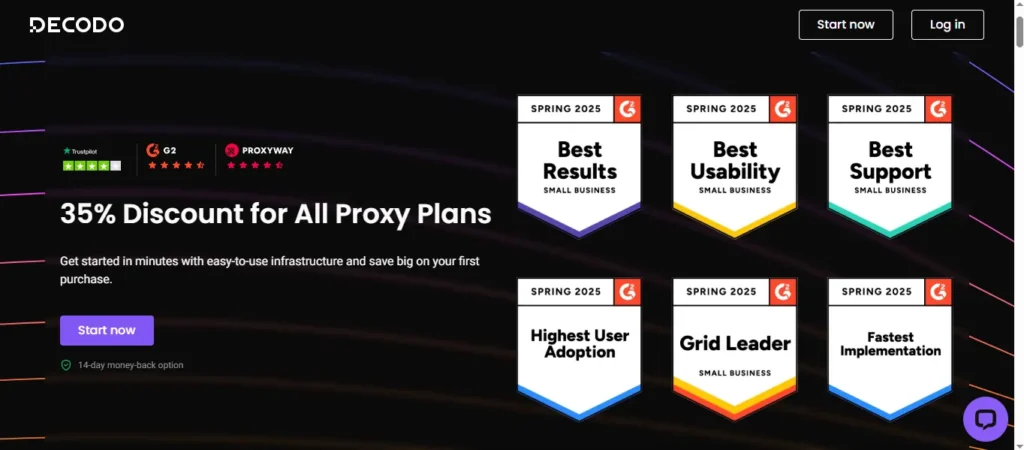
Decodo hits the sweet spot that most residential proxy providers miss entirely. The pool sits at 115 million ethically sourced IPs across 195+ locations, with an average response time under 0.6 seconds. That speed is not theoretical.
I have run sustained scraping jobs pulling product data from e-commerce sites, and Decodo consistently returned responses faster than providers with larger pools. The success rate hovers around 99.86%, and the 99.99% uptime claim held up across weeks of continuous use.
For teams running mid-scale scraping operations or managing multiple automation workflows, this is where the price-to-performance equation makes the most sense.
Pricing: Starts from $3.75/GB for the 3 GB plan, dropping to $2/GB at higher volumes. Pay-as-you-go available at $4/GB. Free trial included with no credit card required for initial testing.
Pros
Cons
Why Decodo for Residential Proxies
The combination of 115M+ IPs, sub-0.6s response times, and pricing that starts well below most competitors makes Decodo the best all-round residential proxy pick in 2026. SOCKS5 support and ZIP code targeting work cleanly with Python scrapers, Puppeteer, and Playwright setups.
2. Oxylabs
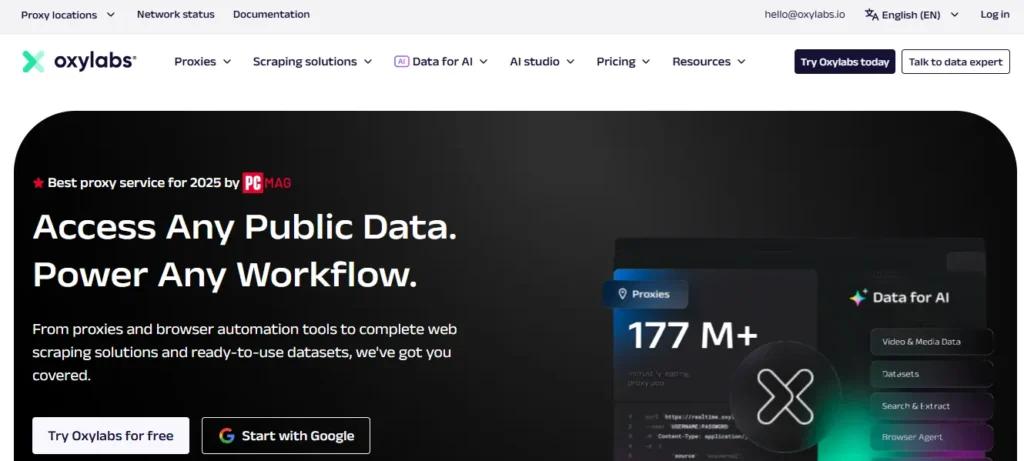
Oxylabs controls the largest verified residential proxy pool in the industry at over 100 million IPs across 195+ countries.
That pool size is not just a marketing number. When you are running millions of daily requests across multiple geographic targets, a larger pool means lower IP reuse and fewer blocks. Their Web Scraper API handles JavaScript rendering and response parsing, which saves hours of engineering time on dynamic sites.
The pricing reflects the enterprise positioning, but for organisations processing serious data volumes, the per-request economics improve significantly with committed plans.
Pricing: Pay-as-you-go at $8/GB. Micro plan at $7.75/GB ($99/month for ~13 GB). Use coupon OXYLABS50 for 50% off the first month. Free trial available.
Pros
Cons
Why Oxylabs for Residential Proxies
When your operation demands millions of daily requests without IP exhaustion, Oxylabs delivers. The verified 100M+ pool, combined with coordinate-level targeting and the Web Scraper API, makes this the provider enterprise teams build their infrastructure around.
3. Webshare
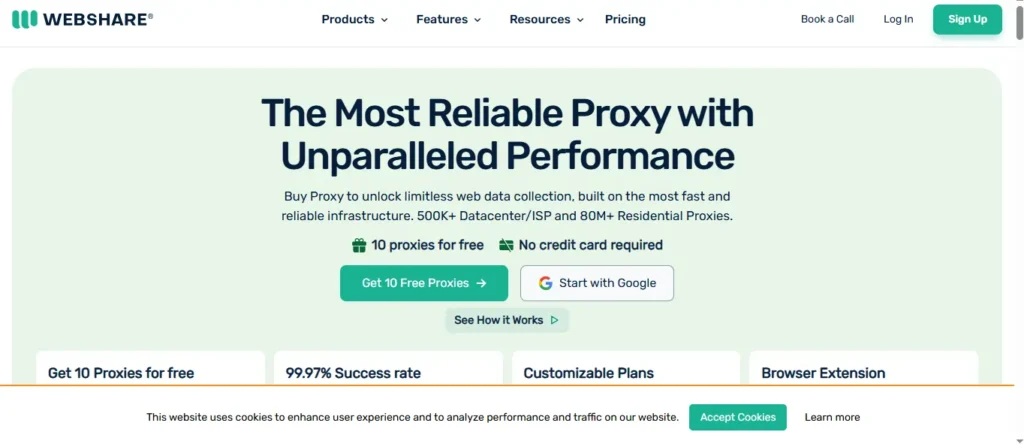
Webshare does something no other provider on this list offers. Ten free proxies with no credit card, no time limit, and no strings attached. That alone makes it the obvious starting point for anyone testing residential proxies for the first time.
The residential pool has grown to over 30 million IPs, which is smaller than premium competitors but more than enough for most scraping projects under moderate scale. The self-service dashboard is one of the simplest in the industry.
You generate credentials, copy the endpoint, and paste it into your script. No calls with sales teams, no onboarding sessions. For developers who want proxies that just work out of the box without enterprise complexity, Webshare delivers.
Pricing: Residential proxies start from $7/GB for 1 GB, dropping to $4.50/GB at 100 GB volumes. Static residential proxies available from $0.225 per IP. Free tier included.
Pros
Cons
Why Webshare for Residential Proxies
The free tier and rock-bottom static residential pricing make Webshare the smartest entry point for residential proxies in 2026. If your workflow does not require 100M+ IPs or granular ZIP code targeting, the lower cost and simplicity here outweigh the smaller pool.
4. Bright Data
Bright Data maintains one of the most comprehensive proxy ecosystems available. The residential pool exceeds 72 million IPs across 195+ countries, and the targeting granularity goes deeper than most competitors, including ZIP code, carrier, ASN, and even coordinate-based selection.
Their open-source Proxy Manager lets you control rotation, session duration, and routing rules through a local dashboard.
For teams that need to scrape geo-restricted content from very specific locations, Bright Data gives you the surgical precision that broader providers cannot match. The 99.99% uptime and 99.9% success rate reflect a mature infrastructure built for sustained, high-volume workloads.
Pricing: Starts from $5.04/GB on pay-as-you-go plans. Enterprise plans at $5/GB for 399 GB+ monthly commitments. Free trial available.
Pros
Cons
5. IPRoyal
IPRoyal keeps things straightforward with a 32 million residential IP pool and a pay-as-you-go pricing model that starts at $7/GB. There are no mandatory subscriptions and no minimum monthly commitments. You buy what you need and use it.
The pool covers 195+ countries with country, state, and city targeting. For freelance scrapers and small teams that need reliable residential IPs without the overhead of enterprise contracts, IPRoyal removes the friction. The dashboard is clean and the proxy generation process takes seconds.
Pricing: Starts from $7/GB with subscription plans offering bulk discounts.
Pros
Cons
6. SOAX
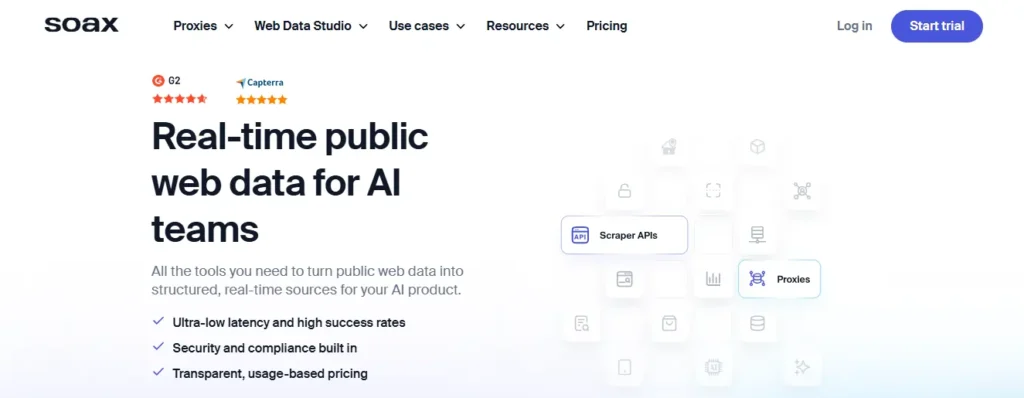
SOAX offers one of the largest ethically sourced residential proxy pools at 155 million IPs across 190+ countries. The ethical sourcing is not just a label. SOAX verifies IP acquisition and consent, which matters for businesses operating under GDPR or CCPA compliance requirements.
Their flexible filtering lets you target by country, city, ISP, and ASN. Plans include access to residential, mobile, and ISP proxies under one subscription. For compliance-focused organisations that need legal defensibility alongside performance, SOAX fills a gap most providers ignore.
Pricing: Starter plan at $3.60/GB (25 GB included for $90/month). Business plans drop to $2/GB at 800 GB.
Pros
Cons
7. DataImpulse
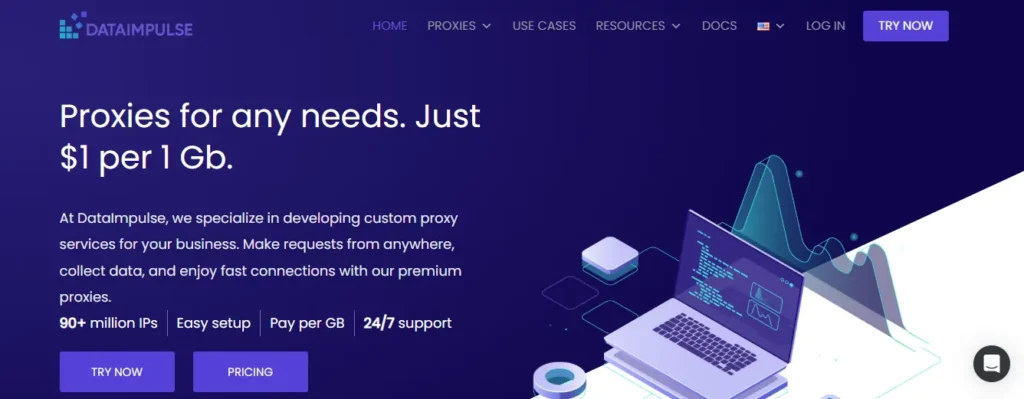
DataImpulse runs a 90 million residential IP pool at a price that undercuts nearly every competitor. Residential proxies start from $1/GB with no subscription required. You pay for traffic, unused gigabytes roll over, and there are no monthly fees.
That pricing structure makes DataImpulse the obvious choice for bulk scraping operations where bandwidth costs are the primary concern. Geo-targeting covers country, state, city, ZIP code, and ASN, which is impressive at this price point. The trade-off is that support and documentation are thinner than premium providers.
Pricing: Starts from $1/GB on the pay-as-you-go plan. Premium proxies from $5/GB for higher success rate targets. 20% discount on 1000 GB+ purchases.
Pros
Cons
8. NetNut
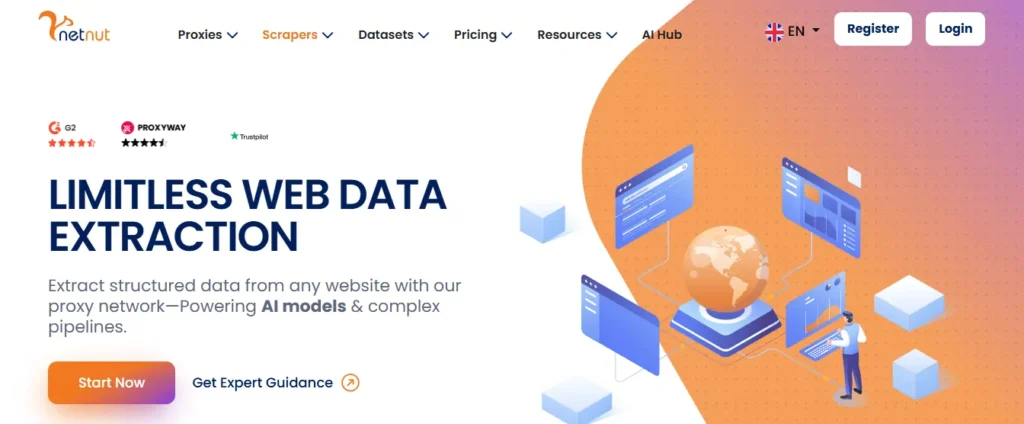
NetNut provides 85 million residential IPs with a particular strength in session stability. Where most providers cap sticky sessions at 10 to 30 minutes, NetNut supports extended sessions that hold for longer duration tasks.
That stability matters for market research, price monitoring, and any workflow where you need the same IP to persist across multiple page loads. Coverage spans 195+ countries, and the ISP-level infrastructure means the IPs are not peer-to-peer relayed, resulting in lower latency.
For analysts running prolonged data extraction across multiple sessions, NetNut quietly delivers consistency.
Pricing: Starts from approximately $3.53/GB on the $99/month plan. Annual discounts available.
Pros
Cons
9. Geonode
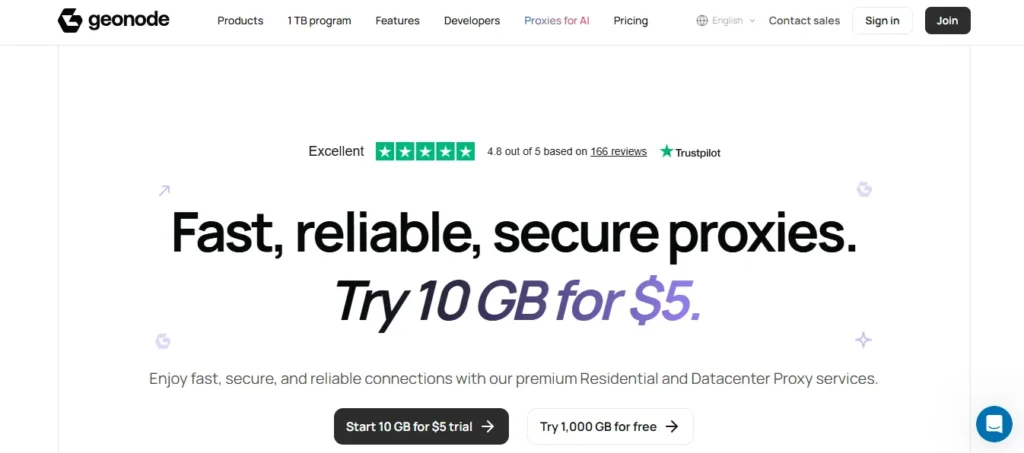
Geonode runs a membership model that flips typical proxy pricing on its head. For $50/month, you get 100 GB of residential bandwidth included, which works out to $0.50 per GB.
That is ten times cheaper than what most competitors charge for the same traffic. The pool is smaller at around 2 million IPs, and the geo-targeting covers 190+ countries.
For high-volume operations where bandwidth cost matters more than pool diversity, Geonode represents possibly the best per-GB value in the residential proxy market. Static residential proxies are also available at approximately $1.50 per IP.research.
Pricing: Premium pay-as-you-go from $3/GB. Membership plan at $50/month with 100 GB included. Extra bandwidth at $0.50/GB.
Pros
Cons
10. NodeMaven
NodeMaven built its reputation on something most residential proxy providers overlook entirely. IP quality filtering. Their system actively scores and filters IPs, removing previously abused or flagged addresses before they reach your proxy rotation.
The pool sits at 30 million IPs, which is smaller than premium competitors, but the filtering means more of those IPs actually work on protected targets.
This approach pairs well with anti-detect browsers like Multilogin and GoLogin, where IP quality directly impacts account survival. Pricing starts from €5/GB with traffic rollover on all plans.
Pricing: Starts from €6/GB on the 5 GB plan (€30/month). Drops to €3.40/GB at 500 GB. Use code NM80 for promotional pricing.
Pros
Cons
🔎 How to Choose the Right Residential Proxy Provider
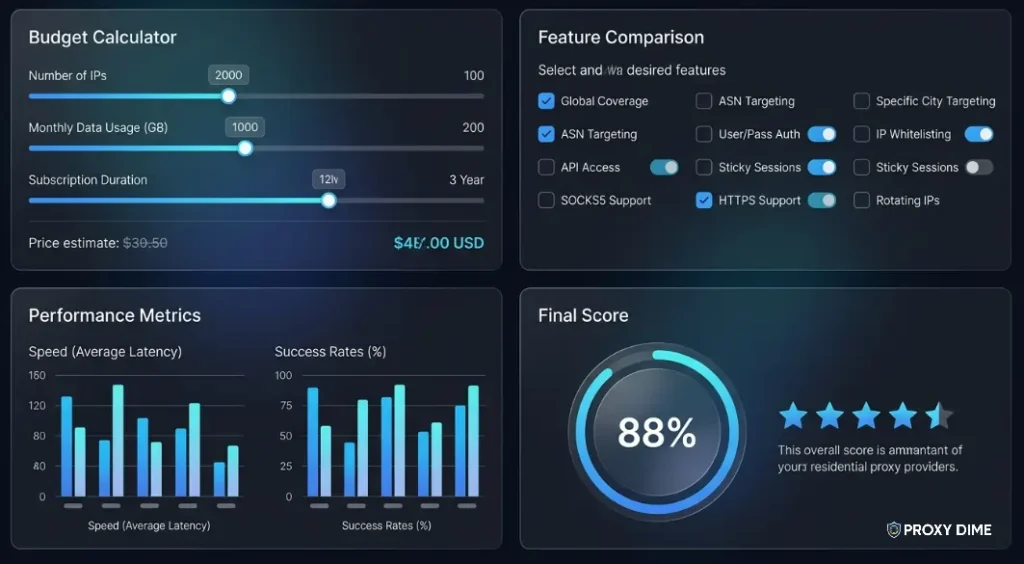
1. Proxy Type Selection
Rotating residential proxies are the default choice for most use cases in 2026. They pass website trust checks, handle CAPTCHAs better than datacenter IPs, and support high-volume request patterns.
Static residential (ISP) proxies work better when you need the same IP to persist across sessions, such as managing social media accounts or maintaining logged-in states. Choose rotating for scraping. Choose static for account management.
2. Geographic Coverage and Targeting Depth
Pool size matters less than targeting precision for your specific workflow. If you scrape local business data, you need city or ZIP code targeting. If you monitor ads in specific markets, you need country-level accuracy at minimum.
Providers like Decodo and Bright Data offer ZIP code and ASN targeting. Others stop at city level. Match the provider's targeting depth to your actual geographic requirements.
3. Speed and Response Time
Average response time directly impacts scraping throughput. A provider returning responses in under 1 second lets you process thousands more requests per hour than one averaging 3 to 5 seconds.
Decodo's sub-0.6 second average and Oxylabs' optimised routing stand out here. For time-sensitive operations like price monitoring or competitive intelligence, faster proxies mean fresher data.
4. Rotation and Session Control
Rotating proxies assign a new IP for each request, which is ideal for large-scale scraping where you need to avoid pattern detection. Sticky sessions hold the same IP for a set period, which is essential for multi-page navigation and checkout flows.
Most providers offer both. The difference is in how long sticky sessions hold and how cleanly the rotation distributes across the pool. Check session duration caps before committing.
5. Pricing and Value at Your Scale
Residential proxy costs range from $0.50/GB on Geonode's membership plan to $8/GB on Oxylabs' pay-as-you-go tier. Your monthly bandwidth consumption determines which pricing structure saves you money.
Light users (under 10 GB) benefit from pay-as-you-go plans without commitments. Heavy users (100 GB+) should look at volume discounts or membership models. Always calculate the effective per-GB cost after discounts, not just the headline price.
✨ Frequently Asked Questions About Residential Proxy Providers
What are residential proxies?
Residential proxies route your traffic through IP addresses assigned by real Internet Service Providers to home devices. Websites see these requests as regular household traffic rather than automated bot activity. This makes residential IPs harder to detect and block compared to datacenter alternatives.
How do residential proxies work for web scraping?
Your scraping tool sends a request to the proxy server, which forwards it through a residential IP address to the target website. The target sees a legitimate household IP and returns the data normally. Rotating residential proxies assign a different IP for each request, preventing pattern-based detection.
What type of proxy is best for scraping protected websites?
Rotating residential proxies deliver the highest success rates on protected sites. They combine the trust score of real ISP addresses with automatic IP rotation that prevents rate limiting. For heavily protected targets behind Cloudflare or DataDome, residential proxies outperform datacenter IPs significantly.
How much do residential proxies cost in 2026?
Residential proxy pricing ranges from $0.50/GB on volume membership plans to $8/GB on pay-as-you-go tiers. Most mid-range providers charge between $3 and $5 per GB for subscription plans. DataImpulse offers the lowest entry at $1/GB, while Geonode's membership plan reaches $0.50/GB at 100 GB monthly.
Are residential proxies legal to use?
Using residential proxies is legal in most jurisdictions. The legality depends on what you do with them, not the proxies themselves. Web scraping publicly available data is generally permissible. Accessing accounts that are not yours or violating a website's terms of service can create legal issues regardless of your proxy type.
Can I use free proxies for serious scraping projects?
Free proxies are unreliable for production scraping. They suffer from slow speeds, frequent downtime, shared abuse, and potential security risks. Webshare's free tier of 10 proxies works for initial testing, but any sustained scraping workflow requires a paid residential proxy service with proper infrastructure.
Do I need residential or datacenter proxies for my project?
Choose residential proxies when targeting websites with strong anti-bot protection, when geographic accuracy matters, or when you need to mimic real user behaviour. Choose datacenter proxies when speed is the priority, the target has minimal protection, and budget is tight. Most serious scraping operations in 2026 use residential as their primary type.

More Guides On Proxy Dime
🎯 Final Thoughts
Decodo earns the top spot for most users because it balances pool size, speed, and pricing better than anyone else at this tier. Oxylabs is where enterprise teams should start when scale and reliability matter more than per-GB cost. Webshare makes sense as a first step, especially with that free tier that lets you test without spending a thing.
For pure budget efficiency at scale, DataImpulse at $1/GB and Geonode at $0.50/GB on the membership plan are hard to argue against. Most of these providers offer free trials. Use them. A 30-minute test with your actual target sites tells you more than any review article ever will.
👉 Top Pick: Decodo — Best overall value for residential proxies in 2026
👉 Enterprise Pick: Oxylabs — Largest pool, enterprise infrastructure
👉 Budget Pick: Webshare — Free tier, lowest barrier to entry