You configured the proxy, ran the request, and the target site still flagged you. Somewhere between your browser and the destination, your real IP leaked through an X-Forwarded-For header, and the session was dead before it started.
That is the reality of working with poorly built anonymous proxy providers. Websites have become aggressive about detecting proxy traffic. Anti-bot systems fingerprint your headers, check for WebRTC leaks, and correlate behavioural patterns across sessions.
A proxy that simply forwards requests without stripping identifying metadata is not anonymous at all.After testing over 30 proxy services across web scraping, multi-account management, geo-unblocking, and competitive research workflows, I narrowed it down to 9 providers that deliver genuine anonymity in 2026.
These are not just proxies with big IP pools. They actively mask your identity at the header level, support SOCKS5 and HTTPS, and hold up under real pressure from sophisticated detection systems.
📢 What Are Anonymous Proxies and Why Do They Matter?
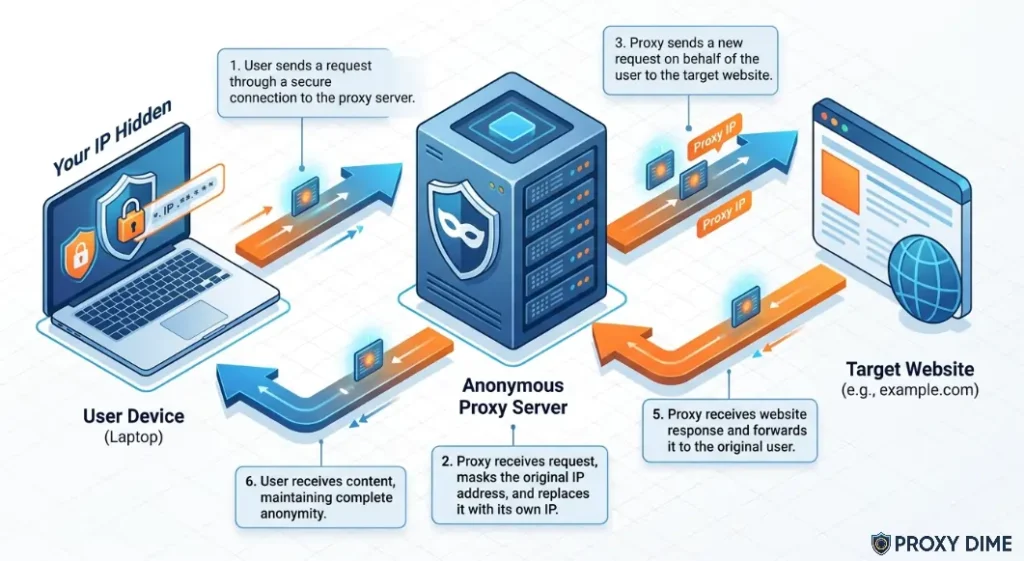
Anonymous proxies are intermediary servers that route your internet traffic while stripping or modifying the HTTP headers that reveal your real identity. Unlike transparent proxies, which pass your original IP to the destination server, anonymous proxies remove the X-Forwarded-For header and mask identifying metadata. Elite anonymous proxies go further and hide the fact that you are using a proxy at all.
This matters because modern websites do not just check your IP address. They inspect headers, analyse browser fingerprints, and look for patterns that signal automated or proxy-based traffic.
If you are managing multiple social media accounts from one machine, scraping competitor pricing data, or accessing region-locked content, a standard proxy gets caught fast. Your accounts get flagged. Your scraper gets blocked. Your data comes back incomplete or poisoned with CAPTCHA pages.
For anonymity, residential proxies outperform datacenter proxies because they carry IP addresses assigned by real ISPs, making them appear as regular home users to target sites. ISP proxies sit in between, offering datacenter speed with residential trust scores. Datacenter proxies are the cheapest option but the easiest to detect and block.
Quick Tip: For anonymous proxies, residential IPs typically outperform datacenter IPs because websites trust ISP-assigned addresses far more than hosted server ranges. Prioritise providers offering SOCKS5 support and automatic header stripping for maximum anonymity.
✨ Anonymous Proxy Feature Comparison 2026
| Proxy Provider | Proxy Types Available | Total IP Pool Size |
|---|---|---|
| Decodo | Residential, ISP, Datacenter | 65M+ |
| NodeMaven | Residential, SOCKS5 | 30M+ |
| IPRoyal | Residential, ISP, DC, Mobile | 32M+ |
| Bright Data | Residential, ISP, DC, Mobile | 150M+ |
| Oxylabs | Residential, ISP, DC, Mobile | 177M+ |
| Webshare | Datacenter, SOCKS5 | 60K+ proxies |
| Proxy-Seller | Residential, ISP, DC, Mobile | 20M+ |
| ZenRows | Residential, Scraper API | Undisclosed |
| Thordata | Residential, ISP, DC, Mobile | 60M+ |
1. Decodo
Decodo (formerly Smartproxy) does something most anonymous proxy providers skip entirely. It bundles a dedicated anti-detect browser called X Browser directly into the platform. That means you get proxy rotation and fingerprint masking in a single workflow, without stitching together separate tools.
The residential pool covers 65 million+ IPs across 195+ locations with both sticky and rotating session modes. For multi-account managers running separate identities on e-commerce or social platforms, this native fingerprint isolation removes the biggest anonymity gap that standalone proxies leave wide open.
The browser extensions for Chrome and Firefox include WebRTC leak prevention, which stops your real IP from leaking through browser vulnerabilities that most proxy setups ignore entirely.
Key Features
Pricing
Residential proxy pricing starts from approximately $4/GB. Free trial available. ISP static proxies available as dedicated IPs.
Pros
Cons
Why Decodo for Anonymous Proxies: The X Browser and WebRTC leak prevention address the two biggest anonymity failures that standard proxy connections leave exposed. If you manage multiple anonymous identities across platforms, Decodo handles the proxy layer and the browser fingerprint layer in one place. That is a genuine workflow advantage most competitors cannot match.
2. NodeMaven
NodeMaven built its entire platform around one concept that matters deeply for anonymous proxy users. IP quality filtering. Every request you send goes through an internal scoring system that checks whether the IP is flagged, blacklisted, or carries a low trust score before your traffic touches it.
This is not something you find in most proxy dashboards. The pool of 30 million+ residential IPs spans global locations with country and city targeting. Sticky sessions hold connections steady for identity-sensitive workflows like account management or sustained anonymous browsing.
For anyone who has been burned by a proxy provider assigning dirty IPs that instantly trigger CAPTCHAs, NodeMaven addresses that pain at the infrastructure level.
Key Features
Pricing
Plans start from €5/GB. Trial available for $3.50 with 750MB of bandwidth. Use code AFFMAVEN50 for 50% off.
Pros
Cons
Why NodeMaven for Anonymous Proxies: The IP quality filter is what separates NodeMaven from the pack. Getting assigned a clean, unblacklisted IP on every connection is not a marketing line here. It is a measurable feature built into the routing logic. For workflows where one dirty IP ruins the entire session, that filter alone justifies the price.
3. IPRoyal
IPRoyal keeps anonymous proxy access simple and affordable with a model that many privacy-focused users genuinely appreciate. You pay for traffic and it never expires. No monthly subscriptions forcing you to burn through bandwidth you do not need.
The pool of 32 million+ residential IPs covers 195 countries with country, state, and city targeting. Both HTTP and SOCKS5 protocols are supported, giving full flexibility for encrypted anonymous connections.
IPRoyal also offers ISP, datacenter, and mobile proxy types, so you can match the anonymity level to the sensitivity of each task. For individuals and small teams who need anonymous proxy access without committing to enterprise contracts, IPRoyal delivers a clean and honest pricing structure.
Key Features
Pricing
Residential proxies available on a pay-as-you-go model. Traffic never expires. Use code AFFMAVEN10 for 10% off your first purchase.
Pros
Cons
Why IPRoyal for Anonymous Proxies: The non-expiring bandwidth model is a standout for anonymous proxy users who do not scrape at enterprise volume every day. You buy the traffic, use it on your schedule, and it never disappears. Combined with SOCKS5 and city-level targeting, it is one of the most straightforward anonymous proxy setups available.
4. Bright Data
Bright Data operates the largest verified proxy network available, with over 150 million IPs spanning residential, datacenter, ISP, and mobile types. For anonymous proxy work at enterprise scale, that pool size translates into a critical advantage.
You can sustain millions of anonymous requests daily without recycling IPs fast enough to trigger pattern detection. The platform offers granular targeting down to ASN, city, and carrier level, plus a Web Unlocker tool that handles CAPTCHAs and anti-bot challenges automatically.
Bright Data strips identifying headers and supports both HTTPS and SOCKS5 for fully encrypted anonymous tunnelling. Teams running large data collection pipelines, ad verification operations, or competitive intelligence programmes across dozens of markets find genuine value in the infrastructure depth.
This is not a budget option. But for organisations where anonymous access at scale is a business requirement, the reliability justifies the spend.
Key Features
Pricing
Residential proxy pricing starts from approximately $5.04/GB. Enterprise volume discounts available. Free trial offered.
Pros
Cons
Why Bright Data for Anonymous Proxies: When you need anonymous proxy access across 195+ countries at volumes that would exhaust smaller pools within hours, Bright Data is built for that reality. The Web Unlocker handles detection challenges automatically, and the 150M+ pool means your anonymous sessions rarely touch the same IP twice. For enterprise anonymity requirements, nothing else matches the infrastructure.
5. Oxylabs
Oxylabs maintains a proxy pool exceeding 177 million IPs, the largest raw count of any provider in this list. For anonymous proxy operations, that scale directly reduces the probability of receiving an IP that a target site has already flagged.
Their residential proxies strip identifying headers by default and support unlimited concurrent sessions, which matters when you are running parallel anonymous workflows across multiple targets simultaneously. SOCKS5 support is included alongside HTTPS, and free advanced targeting covers ASN, ZIP code, city, state, and country levels.
The 99.9% uptime guarantee means your anonymous sessions stay alive through extended tasks. Oxylabs suits teams that need reliable, high volume anonymous access for data gathering, market research, or ad verification across global markets.
Key Features
Pricing
Pay As You Go starts at $8/GB. Micro Plan at $99/month ($7.75/GB). Use code OXYLABS50 for 50% off.
Pros
Cons
6. Webshare
Webshare offers something no other provider on this list matches for anonymous proxy newcomers. A genuinely free tier with 10 anonymous proxies and up to 1GB of monthly bandwidth, no credit card required. These are not publicly shared IPs from a free list.
They are private proxies assigned to your account. Paid plans start at just $2.99 per month for 100 proxies, making this the most accessible entry point for anonymous browsing and light scraping work. The proxies support HTTP and SOCKS5 protocols and work across desktop, mobile, and headless browser environments.
For users who need anonymous access for basic privacy, testing scraping scripts, or managing a few accounts without investing in a premium service first, Webshare removes the financial barrier entirely. The trade-off is that the pool is primarily datacenter based, so detection rates run higher on aggressive anti-bot systems.
Key Features
Pricing
Free plan with 10 proxies and 1GB. Paid plans from $2.99/month for 100 proxies ($0.029/proxy). Annual billing saves up to 60%.
Pros
Cons
7. Proxy-Seller
Proxy-Seller covers 220+ countries and regions, which is the widest geographic reach of any provider reviewed here. For anonymous proxy users who need to appear as a local user in a specific country or city, that coverage matters more than raw pool size.
The platform offers residential, ISP, datacenter, IPv4, IPv6, and mobile proxies, all with HTTPS and SOCKS5 support. Residential IPs start from $0.70/GB, putting it among the more affordable options for anonymous traffic. The control panel provides real-time analytics with geographic and ISP targeting controls, plus rotation mode settings that let you tune anonymous session behaviour to your specific workflow.
Proxy-Seller activates accounts within minutes and authorises connections through username/password or IP allowlisting. For geo-unblocking specialists and researchers who need anonymous access from countries that many smaller providers simply do not cover, this is a reliable pick.
Key Features
Pricing
Residential proxies from $0.70/GB. ISP proxies from $0.66/GB. Datacenter IPv4 from $0.75/IP. Flexible plan options.
Pros
Cons
8. ZenRows
ZenRows approaches anonymous proxy access from a developer-first angle. Rather than selling raw proxy bandwidth alone, it wraps residential proxies inside a Universal Scraper API that handles anti-bot bypass, JavaScript rendering, and header management automatically.
For developers building anonymous data collection pipelines, this eliminates the need to configure proxy rotation, fingerprint headers, or manage CAPTCHA-solving logic separately. The residential proxy pool supports SOCKS5 connections with plans starting at $69/month for the Developer tier. Concurrency scales from 5 parallel requests on the free plan up to 400+ on Business plans.
The real value for anonymous proxy users is that ZenRows strips identifying metadata and rotates fingerprints at the API level, so every request leaves the network looking like a unique, legitimate browser session. If you write code and need anonymous access to protected targets, ZenRows builds the anonymity layer into the API rather than leaving it to you.
Key Features
Pricing
Developer plan starts at $69/month. Residential proxy bandwidth from $5.50/GB. Free plan available with limited credits.
Pros
Cons
9. Thordata
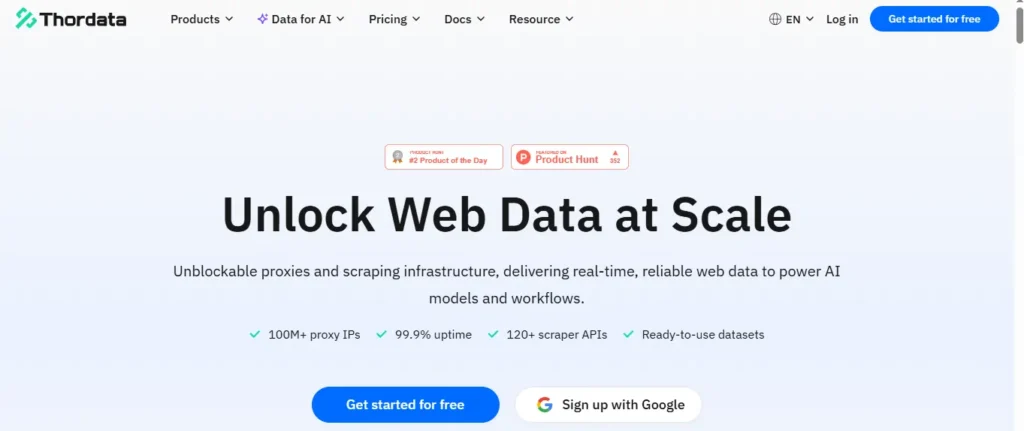
Thordata delivers anonymous residential proxy access at the lowest per-GB cost on this list. Starting from $0.65/GB, it opens up high-volume anonymous workflows for users and teams that would otherwise burn through their budget on pricier providers.
The pool of 60 million+ residential IPs covers 195+ countries with city, state, and ISP level targeting. Thordata supports both HTTP/S and SOCKS5 protocols, and the platform claims 99.9% uptime. For anonymous data collection at scale, price sensitive ad verification, or sustained geo-unblocking operations where you need to move large volumes of traffic through clean residential IPs, Thordata makes the economics work.
Mobile, ISP static, datacenter, and even unlimited residential plans round out the offering. The trade-off is that the platform is newer and less battle-tested in community discussions compared to established names. But for pure cost efficiency on anonymous residential proxy traffic, the numbers speak clearly.
Key Features
Pricing
Residential from $0.65/GB. Mobile from $2.20/GB. Unlimited residential from $69/day. Datacenter from $0.75/IP. Free trial available for new users.
Pros
Cons
🌟 How to Choose the Right Anonymous Proxy Provider
1. Proxy Type Selection
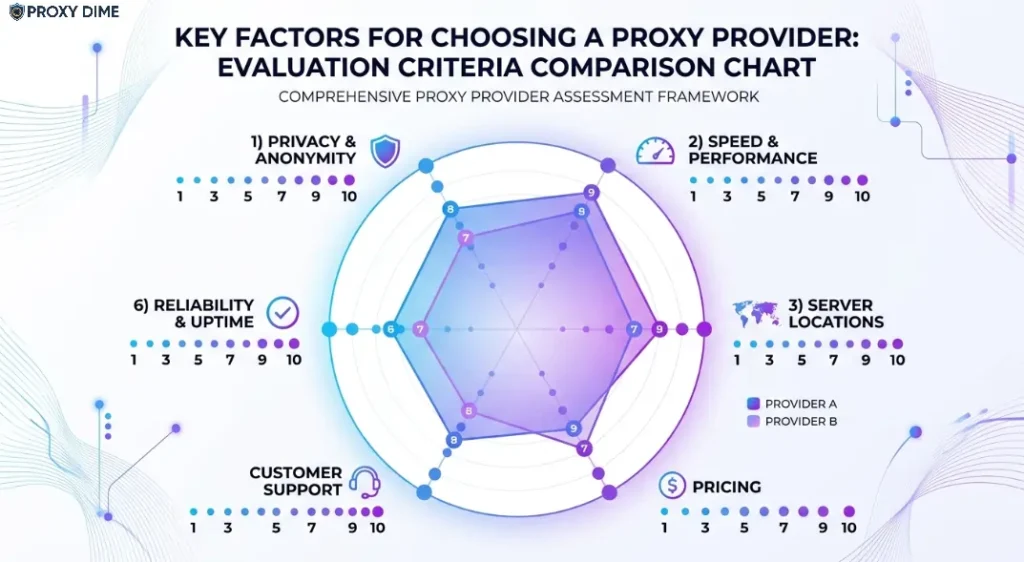
Residential proxies deliver the highest anonymity because their IPs belong to real ISP subscribers. Websites treat them as regular home connections, making detection far less likely than with datacenter ranges. ISP proxies offer a middle ground with datacenter speed and residential trust scores. Datacenter proxies work for targets with weak detection but fail fast on aggressive anti-bot systems. For true anonymous access, residential or ISP should be your default.
2. Geographic Coverage
Anonymous proxy users often need to appear as a local user in a specific region. If you are accessing geo-restricted content, verifying ads in a particular market, or scraping localised search results, city and country targeting determines whether the proxy actually works. Providers with 195+ country coverage and city level targeting give the most flexibility. Check that your target countries are genuinely supported, not just listed.
3. Speed and Response Time
Anonymity means nothing if the proxy is too slow to complete your workflow. For anonymous browsing and account management, latency under 1 second keeps sessions responsive. For scraping, sustained throughput matters more than single request speed. Providers like Decodo advertise under 0.2 second response times on ISP proxies, which is strong. Always test during a free trial before committing to a paid plan.
4. Rotation and Session Control
Different anonymous workflows need different session behaviour. Sticky sessions hold the same IP for minutes or hours, which is essential for maintaining login sessions or browsing a site without appearing to jump between locations. Rotating sessions assign a new IP on every request, ideal for scraping where you want each request to look like a different user. The best providers let you choose between both modes and configure the duration.
5. Pricing and Value
Anonymous proxy costs range from free (Webshare) to $8+/GB (Oxylabs enterprise). Your choice depends on volume and sensitivity. Casual anonymous browsing or light scraping works fine on IPRoyal or Thordata at under $1/GB. Multi-account management benefits from Decodo or NodeMaven at the $4 to $5/GB range. Enterprise data collection justifies Bright Data or Oxylabs pricing because the infrastructure depth prevents failures at scale. Always calculate your expected monthly bandwidth and compare the total cost, not just the per-GB rate.
💡 Frequently Asked Questions About Anonymous Proxies
What are anonymous proxies?
Anonymous proxies are servers that forward your internet requests while hiding your real IP address from the destination website. They strip identifying HTTP headers like X-Forwarded-For so the target sees only the proxy IP. Elite anonymous proxies also conceal the fact that a proxy is being used at all, providing the strongest identity protection.
How do anonymous proxies work?
When you send a request through an anonymous proxy, the server intercepts it, removes or modifies headers that contain your real IP, and forwards the request using its own address. The response travels back through the proxy to you. SOCKS5 and HTTPS protocols add encryption to this process, preventing anyone monitoring the connection from reading the traffic content.
What type of proxy is best for anonymous browsing?
Residential proxies offer the strongest anonymity because they use IPs assigned by real internet service providers. Websites recognise them as regular user connections and rarely flag or block them. ISP proxies are a solid alternative when you need faster speeds with strong trust scores. Datacenter proxies provide the weakest anonymity against sophisticated detection systems.
How much do anonymous proxies cost?
Pricing varies significantly by provider and proxy type. Free anonymous proxies are available through Webshare (10 proxies, 1GB). Budget residential options start from $0.65/GB with Thordata. Mid-range providers like NodeMaven and Decodo run $4 to $5/GB. Enterprise providers like Oxylabs and Bright Data start around $5 to $8/GB with volume discounts available.
Are anonymous proxies legal to use?
Using anonymous proxies is legal in most countries. Proxies are standard networking tools used by businesses for data collection, privacy protection, and security testing. The legality depends on what you do through the proxy, not the proxy itself. Scraping publicly available data, protecting your browsing privacy, and accessing geo-restricted content you are entitled to are all generally lawful activities. Always check the terms of service for specific websites you access.
Can I use free proxies for anonymous browsing?
Free public proxy lists are risky. Many log your traffic, inject ads, or expose your data to third parties. Webshare is the exception, offering 10 genuinely private anonymous proxies for free. For anything beyond basic testing, paid providers deliver dramatically better anonymity, speed, and reliability. A dirty free proxy can expose more information than using no proxy at all.
Do anonymous proxies protect against WebRTC leaks?
Standard anonymous proxies do not protect against WebRTC leaks. WebRTC is a browser protocol that can reveal your real IP even while connected through a proxy. Providers like Decodo address this with browser extensions that include WebRTC leak prevention. For other providers, you need to disable WebRTC manually in your browser settings or use an anti-detect browser.

More Guides On Proxy Dime
🚀 Final Thoughts
For most anonymous proxy users, the right pick depends on where your priorities sit. Decodo handles anonymity most completely with its built-in anti-detect browser and WebRTC protection.
NodeMaven quietly solves the dirty IP problem with its quality filter, which prevents sessions from failing before they start. IPRoyal gives budget-conscious users honest anonymous access with traffic that never expires.
If enterprise scale is the requirement,Bright Data and Oxylabs have the infrastructure. Most of these providers offer free trials or low cost entry plans. Test with your actual workflow before committing. The proxy that looks best on paper might not suit how you work.