
Running bulk scraping or SEO checks on a tiny private pool gets old fast. You hit rate limits, IPs burn out, and every new project means yet another expensive dedicated block. Shared proxies exist for exactly this pain.
You trade exclusivity for scale so you can throw thousands of concurrent requests at Google SERPs, price comparison sites, or app backends without blowing your budget in the first week.
The trick is picking vendors that manage their shared pools well. Cheap is easy. Clean IP rotation, low block rates, and predictable latency on a crowded subnet is where most shared proxy providers fall apart.
I have pushed these networks with long‑running crawlers, rotating user agents, and aggressive concurrency to see which ones actually hold up. This guide walks through the 8 Best Shared Proxy Providers 2026 that balance cost per IP with connection quality for scraping, SEO tools, and automation stacks.
Shared Proxies Explained for Real‑World Use
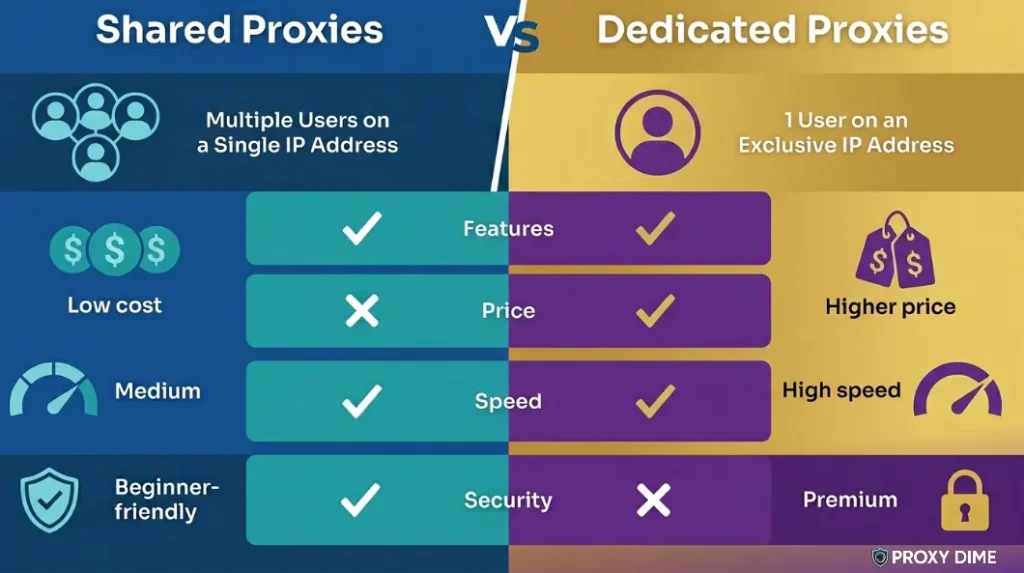
Shared proxies are datacenter IPs that multiple customers use at the same time. Instead of paying for a dedicated block you never fully consume, you tap into a much larger pool and let the provider handle routing, rotation, and failover.
For high‑volume scraping, SERP tracking, price monitoring, and similar tasks, that cost profile makes far more sense than burning residential bandwidth on cheap targets. Oxylabs, Decodo and Webshare all push this model hard in 2026 for budget users that still care about stable uptime.
Technically, a shared proxy node sits in a data centre rack and accepts connections from many customers. The provider uses load balancers and rotation logic to spread outbound requests across thousands of IPs.
You do not own any individual address but you benefit from a bigger pool. The main risk is neighbour behaviour. If someone else abuses the same IP range, you might see more CAPTCHAs or blocks. Good vendors manage this by traffic shaping, abuse detection, and smart subnet allocation.
Quick tip: For 8 Best Shared Proxy Providers 2026, shared datacenter proxies usually beat residential IPs when you need cheap, fast access to public web pages. Prioritise providers that publish real pool size, clean pricing per IP, and clear rotation policies, rather than vague “unlimited” marketing.
High-Quality Shared Proxy Providers You Can Trust
| Provider | Real Edge | Best Fit |
|---|---|---|
| Decodo | Smart rotation | SEO and scrapers |
| Webshare | Huge cheap pool | Bulk projects |
| Oxylabs | Enterprise stack | Large teams |
| Bright Data | Granular control | Regulated sectors |
| Thordata | Clean subnets | Data engineers |
| Proxy Seller | Easy static blocks | Tool owners |
| IPRoyal | Low entry cost | Side projects |
| NetNut | ISP backbone mix | Always‑on crawlers |
1. Decodo
Decodo leans hard into value for shared datacentre traffic. You get over five hundred thousand datacentre IPs and can choose pay per IP or pay per gigabyte, which is rare at this price point. Shared nodes come with 99.99 percent uptime and average response times under 0.3 seconds, so crawlers stay smooth when you ramp threads.
The dedicated shared product page even calls out shared datacentre proxies starting around fifty cents per gigabyte on some bands, which is very sharp for 2026. This setup suits SEO tools, sales intelligence crawlers, and general web scraping that does not need residential trust.
Key Features
Pricing
Shared datacentre traffic starts around $0.6 per GB on the smallest 10 GB bundle, with larger packages dropping towards $0.4 per GB. Shared IP bundles start at about $0.035 per IP on the smallest pack.
Pros
Cons
2. Webshare
Webshare is the king of cheap shared datacentre blocks. The headline offer is one thousand shared proxies free, then paid plans that scale up to sixty thousand IPs with discounts up to sixty percent on annual deals. They push “100 proxies for $2.99” as the typical entry bundle, which works out to under three cents per IP.
The shared proxy feature page calls out 99.7 percent uptime from premium datacentres, so you are not buying mystery hardware from random hosting providers. This is perfect for tools like Scrapebox, GSA, and in house scrapers that just need lots of sockets.
Key Features
Pricing
Shared proxy servers start at $0.0299 per proxy on small packs and drop to around $0.0179 per IP at the sixty thousand proxy level, with deeper cuts on annual terms.
Pros
Cons
3. Oxylabs
Oxylabs treats shared datacentre proxies as a side tool to their enterprise stack. The shared product gives you twenty two thousand IPs across multiple locations in the US, Europe and Asia, plus unlimited concurrent sessions and automatic rotation.
They advertise shared bundles starting from about $50 per month, with cost per gigabyte as low as $0.44 on some plans. Uptime is rated at 99.9 percent and you keep access to the same management panel that powers their residential and scraper APIs. This is a good step when you want premium support but still accept shared IPs on cheaper targets.
Key Features
Pricing
Shared datacentre plans start from around $50 per month and can drop to roughly $0.44 per GB in some bundles, depending on volume.
Pros
Cons
4. Bright Data
Bright Data is best known for residential, but their shared datacentre catalogue is deep. You can rent shared IPs on a per IP basis, per GB, or as part of broader proxy access. They focus on compliance, audit trails, and granular controls, which matters for finance, travel and price comparison companies that must document data collection.
The shared proxies themselves live in top tier datacentres and can be blended with other Bright Data products in one dashboard. This provider suits teams that treat shared proxies as one tool inside a larger, regulated data operation.
Key Features
Pricing
Shared datacentre pricing sits above budget competitors, with volume deals negotiated via sales and some public pay as you go tiers on the main pricing pages.
Pros
Cons
5. Thordata
Thordata aims their shared proxies squarely at scraping teams. Marketing describes “high quality proxy service for web data scraping” with residential, ISP and datacentre IPs in one environment.
While most attention goes to their residential products, the datacentre layer is where the cheap shared capacity hides. You get well managed subnets, predictable performance, and good synergy with anti detect browsers and LLM driven scraping helpers, which Thordata promotes in partner content.
This makes it a solid choice when you run mixed pipelines that swing between cheap and trusted IP types.
Key Features
Pricing
Shared datacentre pricing is usually lower than their residential and ISP products, with concrete per IP and per GB numbers listed on their sales pages and adjusted in quotes for big volumes.
Pros
Cons
6. Proxy Seller
Proxy Seller came up in the mobile space, but they also run shared datacentre ranges that appeal to bot owners. You can buy shared IPv4 blocks tuned for SEO tools, sneaker bots, or social automation. Marketing highlights private and shared variants, with control over location and protocol.
They are popular with operators who want simple static lists they can plug into tools without worrying about complex backconnect endpoints. The shared options help you keep costs low while still getting decent speeds in key regions.
Key Features
Pricing
Shared datacentre packs are priced per IP per month, with meaningful discounts as you grow block size.
Pros
Cons
7. IPRoyal
IPRoyal mainly promotes residential and mobile, but their shared datacentre offers are handy for budget SEO tasks. You can grab small batches of IPs for short term projects and pay much less than residential bandwidth.
The dashboard is clean, API keys easy to manage, and the brand runs a lot of content around scraping and automation use cases. For side projects, personal tools, or one off audits, a small shared pack here can be more convenient than overbuying at larger shops.
Key Features
Pricing
Shared datacentre IPs are priced per IP per month, with cheap small packs and discounts as you move up the tiers.
Pros
Cons
8. NetNut
NetNut’s reputation rests on direct ISP connectivity, but they also provide shared datacentre capacity for teams that need raw throughput. The architecture uses single hop routes into ISP networks, which keeps latency low compared with traditional backconnect setups.
For shared datacentre tasks, that means faster response times and fewer timeouts in large crawlers. The product targets agencies and enterprise teams that already send serious monthly traffic volumes, so it works best when you run always‑on monitoring or price scraping.
Key Features
Pricing
Shared IP pricing is bundled into enterprise packages, usually negotiated through sales, with effective per GB rates that line up with premium datacentre competitors.
Pros
Cons
💎 Buyer Notes: Choosing the Right Shared Proxy Stack
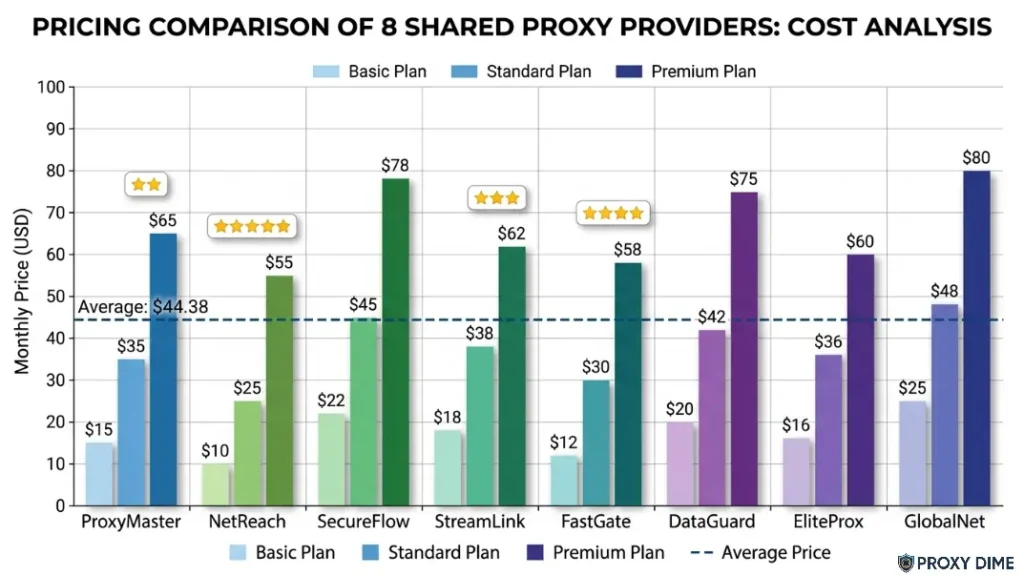
A shared datacentre proxy is not the right tool for every job. It shines when you need cheap, fast access to public web endpoints where strict device level trust does not matter. Think generic SERP scraping, shopping site price grids, or content audits, not logged in social profiles. For these workloads, pay attention to four things.
First, pool hygiene. You want providers that publish IP counts, show some rotation logic, and target the scraping market openly (Decodo, Webshare and Thordata do this with real numbers and positioning). Second, cost structure.
Per IP pricing works well for tools that need static lists, while per GB makes sense for backconnect gateways with heavy traffic. Third, transparency on geos and uptime.
Uptime claims like 99.7 to 99.99 percent, plus named locations, matter much more than vague “global coverage” lines. Fourth, integration comfort. If your team already uses Bright Data or Oxylabs for residential, reusing the same panel for shared DC can save time.
📌 FAQ: 8 Best Shared Proxy Providers
What are 8 Best Shared Proxy Providers ?
They are vendors that rent you datacentre IPs used by several customers at once for scraping, SEO, and automation. Shared usage reduces cost per IP compared with dedicated ranges, while still giving you large pools and decent speeds.
How do shared proxies work in practice?
Your traffic passes through an IP address located in a data centre. The provider routes requests from different customers through the same machines using authentication and rotation rules. If one IP gets too many blocks, traffic shifts onto fresher addresses in the pool to keep success rates acceptable.
Which proxy type is best for shared scraping?
Shared datacentre proxies are best for cheap, high volume scraping on non sensitive sites. They give more throughput per dollar than residential or mobile. For targets with heavy bot protection, combine shared datacentre for light endpoints and residential or ISP IPs for the hard parts.
How much do shared proxies usually cost?
Budget providers like Webshare sell shared IPs from roughly $0.0179 per proxy at high volumes and $2.99 for the first hundred. Decodo quotes around $0.6 per GB on small datacentre bundles, dropping to about $0.4 per GB on big packs. Enterprise vendors sit above those numbers with better support.
Are shared datacentre proxies legal?
Using shared datacentre proxies is legal in most countries because you are just renting connectivity from a hosting provider. Legal risk usually depends on what you do with them. Respect target sites’ terms and local data laws, especially around scraping personal or regulated information.
Can I run SEO rank tracking on shared IPs?
Yes, shared datacentre proxies are ideal for rank tracking. They keep request costs low enough to monitor thousands of keywords daily. Just be ready to swap providers or rotate pools if block rates climb, since neighbours share the same infrastructure.
Are free shared proxies safe for scraping?
Public free shared proxies are risky. They tend to be slow, heavily blocked, and often compromised machines. For anything tied to your brand, client, or valuable data, paid shared providers with real uptime claims and support are the only sensible choice.

More Guides On Proxy Dime
🎯 Final Thoughts
Shared datacentre proxies still earn their place in 2026 for anyone chasing volume on a budget. Decodo is the most balanced choice when you want a mix of clean engineering, flexible pricing, and scraping friendly features.
Webshare makes sense when you just need a mountain of cheap IPs to throw at basic tasks. Oxylabs or Bright Data fit best if your team already lives in their ecosystems and wants shared DC as a lower cost tier. Start with a small pack from two vendors, run your actual workloads for a week, and only then commit to a larger plan.
Which workload is your main reason for looking at shared proxies right now – SERP scraping, general web crawling, or something else?