If you are running serious scraping in 2026, you already know the pain of “successful” jobs that return nothing useful. You get 200 OK, but the content is a fake bot page or a blank React shell behind a wall.
The root cause in most of those cases is weak IP rotation rather than your code. Rotating proxy providers sit in the middle of that mess and either save or ruin your pipeline.
Over the last year I have pushed different pools through SERP tracking, ecommerce scraping, logged‑in dashboards, and JavaScript heavy targets. I care about clean HTML, low retries, and transparent pricing more than pretty dashboards.
This guide focuses on the ten rotating proxy services that stayed stable when others throttled. Use the quick‑pick view below if you just need a fast shortlist.
🔄 What rotating proxy providers do and why they matter
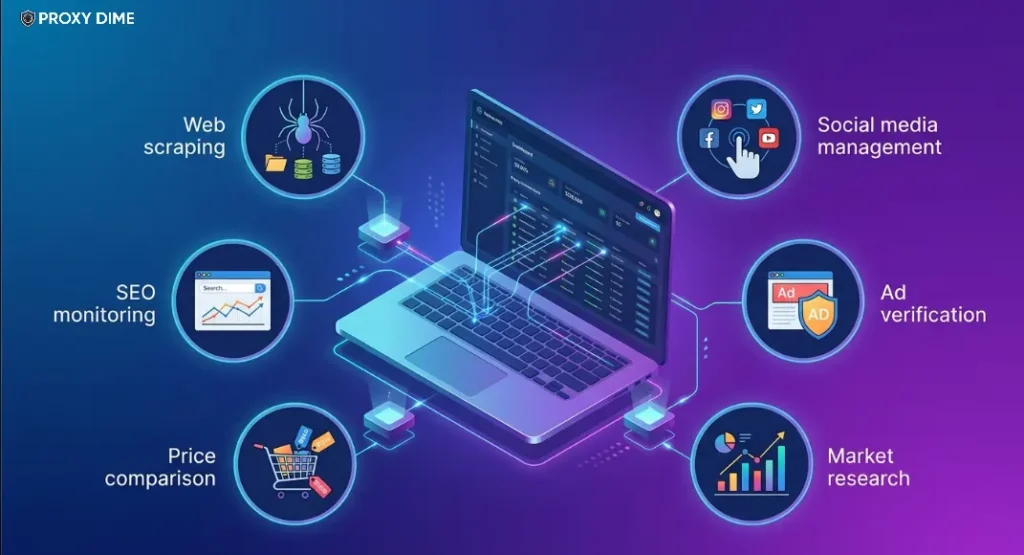
At a basic level, rotating proxy providers give you an access point that swaps the exit IP regularly. Instead of one fixed IP address, every new request or session comes from a different residential or mobile device, which looks much closer to normal user traffic to anti‑bot systems.
This matters when you are scraping ecommerce, SERPs, or social sites that watch for traffic spikes from one IP. A static datacenter proxy can work for a while, then get rate limited or blocked hard. A rotating residential gateway spreads requests across a massive pool, which raises your success rate and keeps your parsers busy instead of your ban handler.
Quick Tip: For rotating proxy providers, residential pools usually outperform plain datacenter options on strict targets because consumer IPs blend into the crowd. Prioritise providers offering large pools, fine‑grained geo targeting, and both rotating and sticky session control in the same product.
High-Performance Rotating Proxy Providers for Smooth Web Scraping
| Proxy provider | Primary strength | Ideal user |
|---|---|---|
| Decodo | Web scraping workhorse | Data engineer |
| Webshare | Budget‑friendly rotation | Solo scraper |
| Oxylabs | Enterprise‑grade scale | Large data team |
| ZenRows | Scraper API first | Dev with deadlines |
| Thordata | High success scraping | Technical scraper |
| Bright Data | Big pool control | Enterprise ops lead |
| Proxy-Seller | Stable shared pool | Multi‑account user |
| IPRoyal | Simple pay‑as‑you‑go | SMB scraper |
| NetNut | ISP level speed | Performance user |
You can swap in another tenth provider from your existing list if needed.
1. Decodo
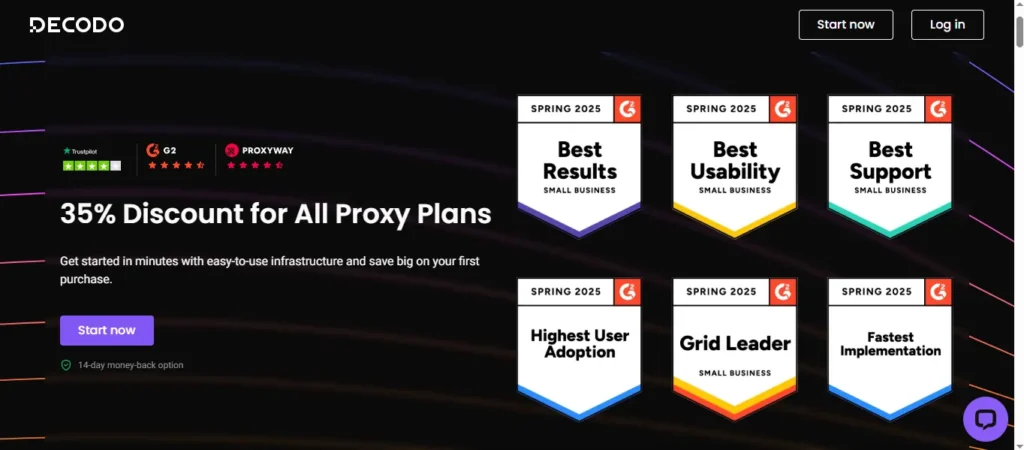
Decodo leans hard into rotating residential proxies for scraping, SEO, and data collection. Their residential network sits at roughly 115M plus IPs across more than 195 locations, with both fast rotation and long sticky sessions through one backconnect gateway.
They quote sub 0.6 second average response time and a success rate just under 99.9 percent on typical targets, which matches what you want for continuous crawls.
For rotating use, you plug a single endpoint into your crawler and let Decodo handle IP shuffling per request or per configured session TTL. In practice that fits Python scrapers, Playwright scripts, no code automation tools, and even bias‑free AI dataset collection.
Pricing for rotating residential starts from about 3 dollars per GB on low tiers with discounts down towards 2 dollars per GB as you scale, plus a short trial and money‑back option.
Key features
Pricing
Pricing for rotating residential starts around 3 to 3.75 dollars per GB on small monthly bundles, dropping as low as roughly 2 dollars per GB on higher volume or pay as you go deals. Free trial and a 14 day money‑back style safety window are available.
Pros
Cons
Why Decodo for rotating proxies
The blend of 115M plus IPs, full geo and session controls, and flexible pay as you go billing makes Decodo a practical main pool if you run web scraping, SERP tracking, and QA checks from the same stack. In my experience similar Smartproxy‑style setups handle both burst and steady jobs well.
2. Webshare
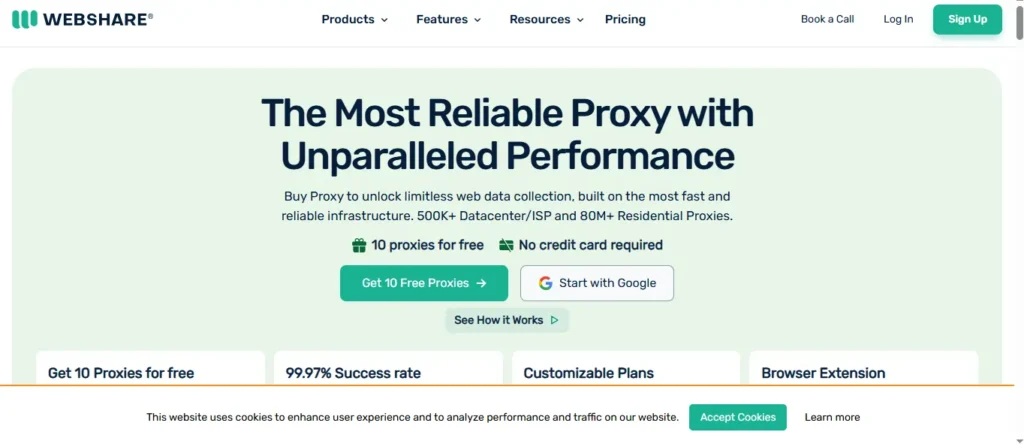
Webshare sits in a different slot. They offer rotating proxies that appeal to builders starting small and scaling later. Official pricing shows a free plan with ten proxies, one GB of bandwidth, and moderate thread limits, then large bundles with tens of thousands of IPs and unlimited bandwidth once you are ready. That mix makes them handy as a cheap rotation layer for side projects or light scraping.
For many people Webshare is the first rotating provider they test for things like simple price scraping and account management. The service exposes both residential style and datacenter style rotation with IP authorisation, thread control, and an API to automate config changes. You will not get the same pool size or strict target hit rate as the big enterprise players, but economy is the selling point.
Key features
Pricing
Free plan includes ten proxies, one GB bandwidth, and fifty threads for an unlimited time. Business plan pricing is listed at roughly 168 dollars per month for seven thousand five hundred proxies and high thread capacity, and premium goes up to sixty thousand proxies and support for three thousand threads at around 1166 dollars per month.
Pros
Cons
3. Oxylabs
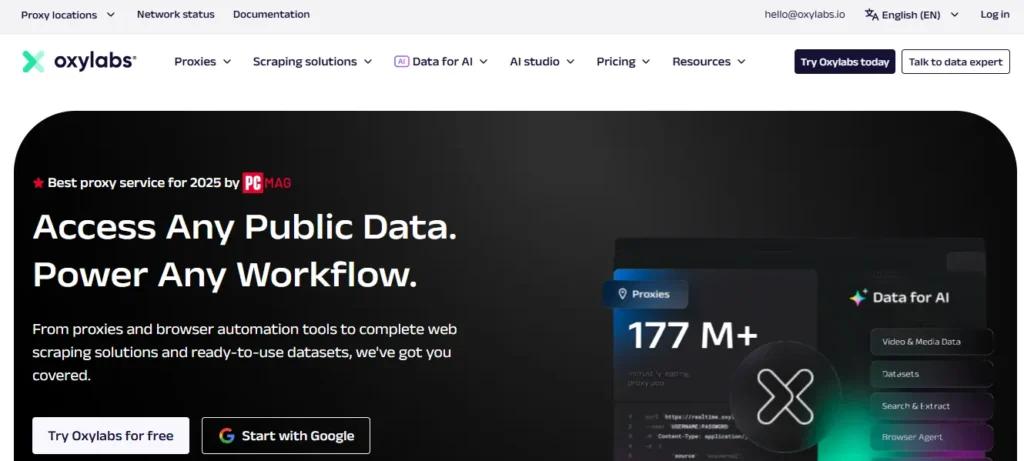
Oxylabs is one of the heavyweights in the rotating proxy providers space and suits people who already know they will push big volumes. Their residential network is counted at around one hundred million plus IPs across one hundred ninety five countries, with quoted success rates near 99.95 percent and response times around 0.6 to 0.9 seconds on typical scraping targets. You also get mobile and datacenter pools behind rotating gateways.
In practice Oxylabs shines when you need city level control for SERP scraping, complex ecommerce, and large enterprise crawlers. They run a Web Scraper API as well, which handles JavaScript and anti‑bot logic so you send a URL and get back structured data or HTML. Pricing is premium, with residential rotation often priced around 6 to 10 dollars per GB by default, though coupons and annual deals lower that.
Key features
Pricing
Residential proxies are often listed from around 8 dollars per GB without discounts, with volume and promotion codes dropping the rate. Datacenter and mobile have their own tables with per IP or per GB models starting around 55 dollars per month or 6 dollars per GB in common bundles.
Pros
Cons
4. ZenRows
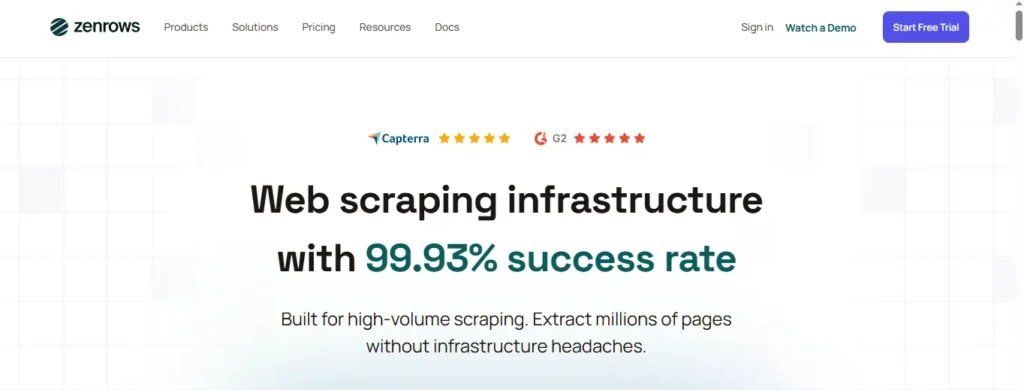
ZenRows approaches rotation from the scraper API angle. Their core product is a Universal Scraper API that hides proxies, headless browsers, and anti‑bot tactics behind one endpoint. Behind the scenes you tap into rotating residential and data centre IPs plus headless rendering, CAPTCHA handling, and concurrency control.
Plans expose a set number of “results” for the API plus a block of traffic for scraping browser or residential proxies. For example, one business tier lists around 60 GB of scraping browser or residential proxy usage at roughly 5 dollars per GB and support for up to one hundred parallel requests. Higher enterprise tiers push that into hundreds of GB at lower per GB rates.
Key features
Pricing
ZenRows has eight pricing editions from a free trial up to about 2999 dollars a month. On mid tiers, scraping browser or residential proxy blocks sit at around 4.5 to 5.5 dollars per GB with hundreds of GB included, dropping down to around 3.15 dollars per GB or even about 2.73 dollars per GB on the largest bundles.
Pros
Cons
5. Thordata
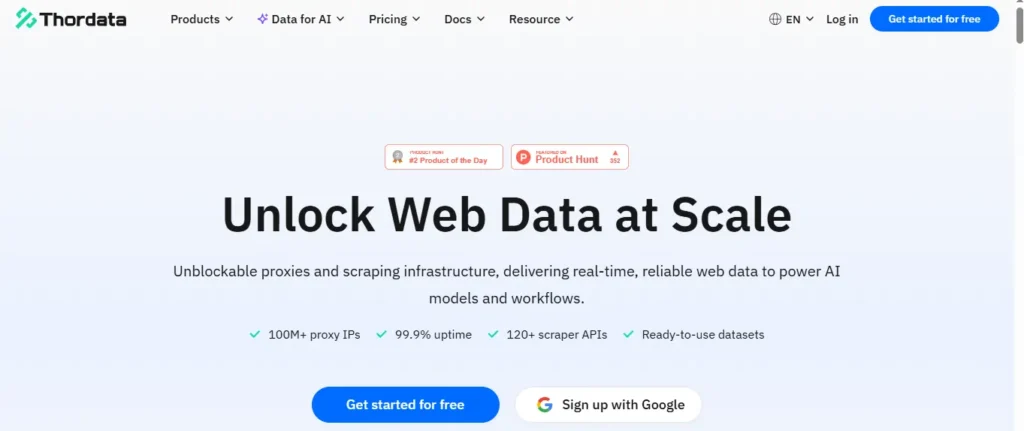
Thordata positions itself squarely as a rotating proxy tool for serious web scraping. Their own comparison table shows a pool of more than sixty to one hundred million rotating IPs across one hundred ninety five plus countries, 99.7 percent success in private tests, average response times near half a second, and per GB prices around 1.8 to 3.5 dollars depending on volume.
The key idea is automatic selection of the best IP for each request, mixing rotation logic and health checks. You also get an “unlimited residential” daily option at about 69 dollars a day for heavy crunch windows. On top of that are mobile and ISP options and scraping APIs billed per one thousand successful requests with a small free trial.
Key features
Pricing
Dupple lists residential traffic starting around 1.8 dollars per GB on standard pay as you go. Mobile starts from roughly 2.2 dollars per GB, static ISP plus datacenter from about 1.5 dollars per IP, and the unlimited residential tier from 69 dollars per day. There is also an intro offer of 5 GB for 4 dollars and a one GB trial obtainable through support.
Pros
Cons
6. Bright Data
Bright Data is the other huge name in this space. For rotating residential proxies they advertise around one hundred fifty million plus IPs across one hundred ninety five countries with country, city, and ZIP level targeting and a built in Proxy Manager.
That makes them suitable for large scale SERP scraping, brand monitoring, ad verification, and anything that needs wide geo coverage.
Residential pay as you go shows around 8 dollars per GB list price reduced to 4 dollars per GB with a coupon, while monthly bundles bring effective pricing down to 3.5, 3, or 2.5 dollars per GB if you commit to higher volume. You also get datacenter, ISP, and mobile with different models, plus tools such as AI‑assisted rotation and automatic CAPTCHA handling in some products.
Key features
Pricing
Residential rotation starts at around 8 dollars per GB list price but can be cut to 4 dollars per GB with the RESIGB50 coupon on pay as you go. Monthly bundles include about 141 GB at 3.5 dollars per GB for 499 dollars, 332 GB at 3 dollars per GB for 999 dollars, and 798 GB at 2.5 dollars per GB for 1999 dollars, all using the same coupon.
Pros
Cons
7. Proxy‑Seller
Proxy‑Seller is well known for shared and static services, but they also provide rotation options that work for multi account work and lighter scraping. Their focus is stability and uptime around 99 percent with predictable throughput, which often matters more than pool size if you run controlled workflows such as social media or rank checking.
Official tables show that Proxy‑Seller covers datacenter, ISP, mobile, and residential with automatic rotation support and billing either per IP or per GB depending on the type. Datacenter and ISP nodes sit in many countries with typical pricing starting in the tens of dollars per month, while shared rotating bundles are built for crawlers and anti detect browsers.
Key features
Pricing
Proxy‑Seller lists combined offers where datacenter, ISP, mobile, and residential proxies start from about 55 dollars per month or around 8 dollars per GB for some pools, with rotation included. Exact numbers vary by country and type, so you need to use the product picker for final rates.
Pros
Cons
8. IPRoyal
IPRoyal shows up often when people want cheap rotating residential on pay as you go terms. Their residential product uses a rotating backconnect setup so every request can hit a different IP, with geo choices and simple dashboards. Pricing examples from recent reviews note a starting point of about 7 dollars per GB with heavy discounts that can reach as low as 1.75 dollars per GB at large scale.
That blend makes IPRoyal fit small agencies that want to cap spend early while still testing proper residential rotation on moderately strict targets. It is not the biggest or flashiest pool, but the basics of IP rotation, target coverage, and simple billing allow you to plug it into SERP scraping scripts or light ecommerce crawls quickly.
Key features
Pricing
Residential rotation starts around 7 dollars per GB on small purchases and can drop to around 1.75 dollars per GB with the largest discount levels according to test reports. Other types such as datacenter and mobile have separate tables.
Pros
Cons
9. NetNut
NetNut is known for its ISP level residential network and high speed routing. For rotating proxies this means you can keep many of the trust benefits of residential IPs while often getting better speed and stability than peer to peer style pools. Their plans cover rotating residential, ISP, and mobile proxies with geo targeting and API management.
Pricing data from roundups points to high speed rotating options starting in the mid range, often around a few dollars per GB for residential and higher for mobile, with free trials on some tiers and coupons available through partners. NetNut suits people running sneaker, ecommerce, and performance sensitive scraping where each millisecond matters.
Key features
Pricing
Public articles describe mid range per GB pricing on rotating residential, generally competitive with other premium pools but with fewer discounts than entry level providers. Exact pricing changes often, so you should check the live tables and then apply your NetNut affiliate coupon code.
Pros
Cons
👉 How to choose the right rotating proxy provider
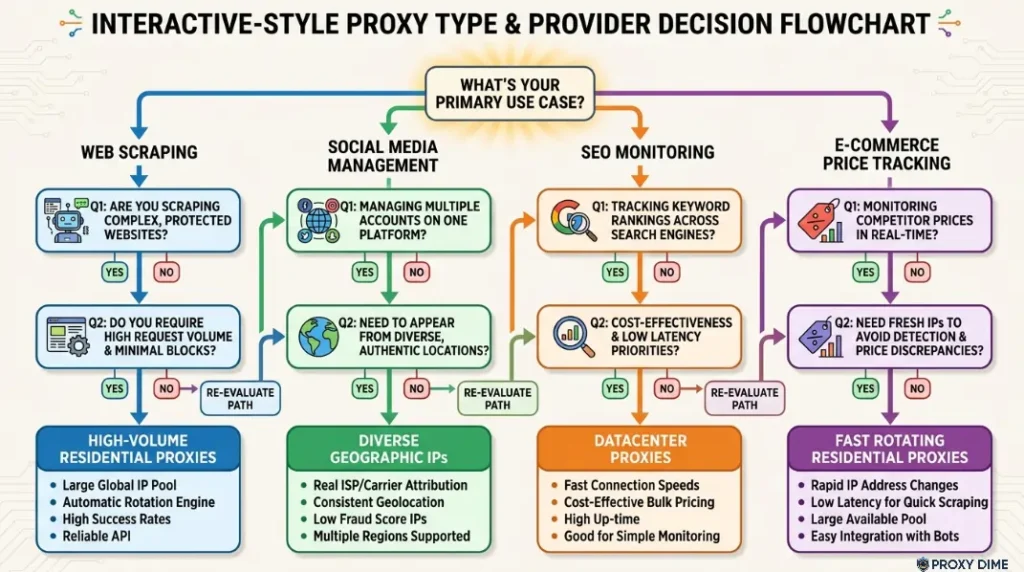
1. Proxy type that matches your targets
For strict ecommerce, SERPs, and social networks, rotating residential proxies give the best balance of trust and cost. They mimic normal user behaviour and survive more aggressive bot rules. Datacenter rotation is faster and cheaper but flags more often, so it fits internal tools or low risk scraping.
Recommendation: Default to residential rotation for public websites and move to datacenter only when targets are lenient or speed is the main goal.
2. Geo coverage for your jobs
If you run local SEO checks, price comparisons, or ad verification, you need strong country and city targeting. Providers such as Decodo, Bright Data, Oxylabs, and Thordata cover 195 plus locations with fine control down to ZIP or ASN, which helps mimic real users in each region.
Recommendation: List your required countries and cities first and shortlist only providers that can target all of them reliably.
3. Speed and response time
Response time matters when you run high concurrency scrapers or near real time monitoring. Official numbers put many top residential pools in the 0.5 to 1.2 second range for average response, with some like Thordata and Oxylabs showing about 0.5 to 0.9 seconds in tests.
Recommendation: For dashboards and live monitoring aim for services quoting near or under one second response on residential routes.
4. Rotation and session control
Some tasks like SERP scraping want fresh IPs every request. Others, such as logged‑in dashboards or carts, need sticky sessions that keep the same IP alive for minutes or hours. Decodo, Bright Data, Oxylabs, and Thordata all give both rotation modes with configurable TTL, which is vital if you run mixed workloads.
Recommendation: Check that your provider allows both per request rotation and sticky sessions on the same pool so you can reuse it across many tools.
5. Pricing and long term value
Rotating residential pools are nearly always billed per GB of traffic. Bright Data quotes 4 to 8 dollars per GB depending on coupons and volume, while Thordata and Decodo can land around 1.8 to 3.5 dollars per GB on bigger bundles. Webshare and IPRoyal serve the budget crowd with lower entry points, plus free trials or small paid tests.
Recommendation: Work out your monthly GB needs roughly, then compare effective price per GB after discounts and coupons rather than list price only.
🔎 FAQ – Rotating proxy providers 2026
What are rotating proxy providers?
Rotating proxy providers offer access points that automatically swap your exit IP, often on every request, using large residential or mobile pools. This helps avoid bans, CAPTCHAs, and throttling when scraping or automating tasks on websites that monitor repeated traffic from the same IP.
How do rotating proxy providers work?
You connect your scraper or browser to a single gateway host and port. Behind that gateway the provider cycles through many IPs from their network based on rules such as per request, per session, or per time window. The target site sees many different users instead of one machine hammering its endpoints.
What proxy type is best for rotating use?
WhaFor most public websites, rotating residential or mobile proxies are best because they blend in with normal user traffic and reduce blocks. Datacenter rotation is faster and cheaper but more visible to anti bot systems, so it works better on lenient targets or internal tools that are not heavily protected.
How much do rotating proxies cost in 2026?
Residential rotating proxies usually fall between about 1.5 and 8 dollars per GB depending on provider and volume. For example Bright Data ranges from 2.5 to 4 dollars per GB with coupons on higher bundles, while Thordata and Decodo can hit 1.8 to 3.5 dollars per GB on pay as you go plans.
Are rotating proxy providers legal to use?
Using rotating proxies is typically legal as a networking tool, but what you do with them must follow website terms, data protection law, and local rules. Legitimate use cases include price comparison, SEO, ad verification, and research at reasonable request rates. You should always check the legal and policy side for your exact targets.
Can I use free rotating proxies for serious scraping?
Free rotating proxies are fine for quick tests, but they are rarely good enough for production. Webshare’s free tier is useful for learning, but pool quality, speed, and stability cannot match paid residential networks from services like Decodo, Thordata, Oxylabs, or Bright Data. Data quality and uptime justify paid plans quickly.

More Guides On Proxy Dime
🎯 Final thoughts
If you want one provider that balances cost and performance, Decodo and Thordata sit in a comfortable middle zone with good success rates and per GB pricing that does not hurt.
Bright Data and Oxylabs make more sense once you know you will push very large, geo heavy workloads and need every tool they ship. Free and budget tiers such as Webshare and IPRoyal still have a role when you want quick experiments without a card hit.