The fastest way to burn a high-value merchant account is logging in from an IP address someone else used to scrape Amazon 30 seconds ago.
Shared rotating pools have their place in brute-force data collection. But when you are managing client social media profiles, running ad verification, or operating e-commerce storefronts, you need an IP that belongs only to you.
That is the entire premise behind private proxy providers. Also known as dedicated proxies, these services assign a static IP address to one customer at a time. The bandwidth is not split. The session history is not contaminated by other users' bad behaviour.
Heading into 2026, the landscape of private IP delivery has shifted. Datacenter IPs are cheaper but more heavily scrutinized by fraud engines, pushing many operators toward dedicated ISP or private residential setups.
I have spent the last three months testing the dedicated IP infrastructure of the market's leading names across multi-account browser setups. Here are the 10 services that actually deliver clean, unshared connections.
10 Best Private Proxy Providers 2026
| Provider | Core Private Proxy Type | Best Fit For |
|---|---|---|
| Decodo | Dedicated ISP & Datacenter | E-commerce multi-accounting |
| Oxylabs | Enterprise Dedicated Datacenter | High-bandwidth SEO tools |
| Proxy-Seller | Single-User Residential & IPv4 | Targeted ad verification |
| Webshare | Budget Private Datacenter | Indie developers & testing |
| Bright Data | Global Static Residential | Corporate compliance teams |
| Thordata | Pay-Per-IP Private ISP | Mid-tier social management |
| ZenRows | Premium Managed Routing | Scrapers hitting bot walls |
| IPRoyal | Non-Expiring Private ISP | Seasonal audit workflows |
| Rayobyte | ASN-Diverse Dedicated ISP | Heavy automated pipelines |
| NetNut | Private Datacenter Clusters | High-speed B2B data extraction |
⚡ The Difference Between Private and Shared Proxies
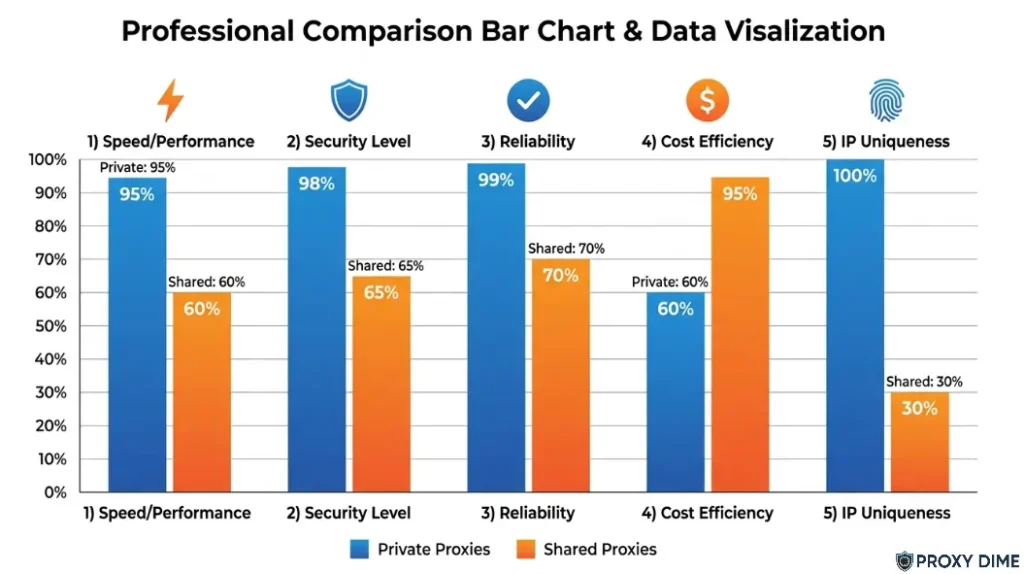
A private proxy guarantees exclusive access. The provider reserves that specific IP address—whether it originates from a datacenter server or a residential broadband connection—solely for your account during your billing cycle.
This exclusivity solves three massive problems for digital operators:
Quick Tip: For long-term account management, private ISP proxies typically outperform private datacenter proxies because they carry a consumer broadband ASN rather than a cloud hosting signature. Prioritize providers offering IP replacements if your dedicated address arrives already flagged.
🏆 Top 10 Private Proxy Providers 2026 Reviewed
1. Decodo
Decodo (formerly Smartproxy) has aggressively expanded its dedicated IP offerings for 2026, providing a highly reliable private proxy infrastructure that blends speed with exceptional customer support.
Their private ISP proxies operate from 15 distinct locations, giving you a static IP that looks like a normal home broadband connection but performs with datacenter speeds.
The dashboard allows you to keep the same IPs indefinitely upon renewal or request a fresh batch. For e-commerce managers running multiple Shopify or eBay stores where IP consistency is a life-or-death metric, Decodo's private ISP network is remarkably stable.
Technical Highlights:
Pricing Structure: Private proxy plans vary by type, with multi-tier subscription models starting small and scaling to enterprise needs.
Pros
Cons
Why Decodo for Private Proxies
Account managers love Decodo because of the renewal persistence. When you are managing a client's 5-year-old Instagram account, you cannot risk the proxy provider silently swapping your dedicated IP halfway through the month. Decodo locks it down.
2. Oxylabs
Oxylabs targets the heavy-duty end of the private proxy market. Their dedicated datacenter proxy service is designed for enterprise clients running massive, continuous scraping pipelines—think SEO rank trackers, flight aggregators, and global brand protection monitors.
The private pool offers unlimited concurrency and bandwidth, ensuring that your data extraction speed is limited only by your own server hardware, not the proxy connection. With starting rates around $50 per month for dedicated blocks, they are not the cheapest, but the infrastructure quality justifies the premium.
Technical Highlights:
Pricing Structure: Dedicated Datacenter Proxies start at $50/month (breaking down to roughly $2/IP depending on volume). Use code OXYLABS50 for 50% off select plans.
Pros
Cons
Why Oxylabs for Private Proxies
If you are running Screaming Frog or a custom Python SEO scraper 24/7 across 10,000 domains, shared proxies will bottleneck your speeds and trigger bans. Oxylabs' dedicated datacenter proxies remove the concurrency limits, giving your scrapers a clear, unshared runway.
3. Proxy-Seller
Proxy-Seller occupies a highly specific and valuable niche in the private proxy ecosystem. They specialize in selling individual, highly tailored dedicated IPs—whether you need IPv4, IPv6, ISP, or mobile.
Unlike providers that force you into massive monthly bundles, Proxy-Seller lets you buy exactly what you need for the exact duration you require.
You can lease a single private IP in a specific city for a week or a year. For operators running tightly controlled affiliate marketing setups or localized ad verification, this granular control over the dedicated IP is invaluable.
Technical Highlights:
Pricing Structure: Individual private proxies start from low single-digit dollars per IP, depending on the asset type and location.
Pros
Cons
4. Webshare
Webshare has built its brand on making proxy access affordable and highly customizable, making it the premier choice for developers testing new scripts.
Their private proxy offering (which they categorize under their dedicated plans) provides complete self-service over an impressive array of datacenter and ISP addresses.
What makes Webshare unique is its modular pricing. You pay a baseline for the private IPs and then add features—like high bandwidth priority or increased concurrency—only if your project actually needs them.
Technical Highlights:
Pricing Structure: Highly customizable. Datacenter starts around $1.40/IP; ISP starts around $4.20/IP.
Pros
Cons
5. Bright Data
Bright Data is the heavyweight champion of proxy infrastructure, and their private proxy solutions—often grouped under their static residential and dedicated datacenter umbrellas—are built for uncompromising corporate compliance.
When you buy private IPs here, you are plugging into a network that powers Fortune 500 data pipelines. The granular control over session parameters and the exhaustive geographic coverage across 150M+ IPs make this the default choice when failure is not an option and budget is a secondary concern.
Technical Highlights:
Pricing Structure: Premium pricing model. Dedicated and static residential IPs are priced higher than market average, reflecting the enterprise focus.
Pros
Cons
6. Thordata
Thordata positions itself as the high-speed, cost-effective alternative for bulk private proxy needs. Their static ISP proxies provide the dual benefit of dedicated, unchanging IP addresses backed by robust residential ASNs, resulting in what they claim is 99.9% uptime.
Thordata operates on a pay-per-IP model for its private connections, featuring unlimited bandwidth subject to fair use. If you are running dozens of automated social media profiles and need the trust of a residential connection with the persistent identity of a private server, Thordata delivers without breaking the bank.
Technical Highlights:
Pricing Structure: Private static ISP proxies utilize a flat pay-per-IP rate with no traffic charges.
Pros
Cons
7. ZenRows
ZenRows is an outlier on this list because it does not sell you a raw list of private IPs. Instead, it offers a “Premium Proxy” feature within its Universal Scraper API. When you enable this feature, ZenRows automatically routes your request through a highly vetted, private residential connection from its pool.
You don't manage the IP; ZenRows does. This system mimics natural user behaviour perfectly, bypassing aggressive anti-bot systems that would instantly block a standard private datacenter IP. It is the ultimate “done-for-you” private routing solution for developers who just want the data.
Technical Highlights:
Pricing Structure: API credit system. Premium Proxy requests cost 10x the standard rate due to the high cost of acquiring clean residential addresses.
Pros
Cons
8. IPRoyal
IPRoyal has carved out a solid reputation by focusing on transparency and offering genuinely useful static options. Their private proxy lineup—highlighted by their static ISP offerings—gives users a dedicated address from over 60 countries.
A major selling point for IPRoyal is their approach to bandwidth on certain plans: traffic often does not expire. This makes IPRoyal an excellent choice for teams that run intermittent SEO audits or seasonal e-commerce scraping, where locking into a “use it or lose it” monthly dedicated plan feels like a waste of budget.
Technical Highlights:
Pricing Structure: Highly competitive pricing across dedicated and static tiers. Use code AFFMAVEN10 for 10% off.
Pros
Cons
9. Rayobyte
Rayobyte (formerly Blazing SEO) cut its teeth in the demanding world of sneaker copping, where slow proxies mean lost money. Today, their private proxy infrastructure spans massive datacenter and ISP pools. What sets Rayobyte apart is its ASN diversity.
Their private IPs are spread across 9 different ASNs, and they own all their hardware. This means if a target website suddenly blacklists one specific hosting provider, your entire Rayobyte proxy list doesn't go down with it. It is a remarkably resilient setup for operators running heavy automated pipelines.
Technical Highlights:
Pricing Structure: Tiered monthly subscriptions based on the number of dedicated IPs required.
Pros
Cons
10. NetNut
NetNut attacks the private proxy market from an enterprise angle, focusing on high-speed B2B data extraction.
Their dedicated datacenter proxies are hosted on enterprise-grade servers, designed to deliver the low-latency, high-bandwidth connections required for massive SEO monitoring or cybersecurity threat intelligence. Because these IPs are strictly dedicated to your account, you avoid the IP blacklisting risks associated with shared datacenter pools.
If you are building a tool that needs to ingest terabytes of data daily from non-bot-protected sites, NetNut provides the raw horsepower to do it safely.
Technical Highlights:
Pricing Structure: Enterprise-focused pricing. Use code AFFCOUPON20 for 20% off.
Pros
Cons
👉 How to Buy the Right Private Proxy
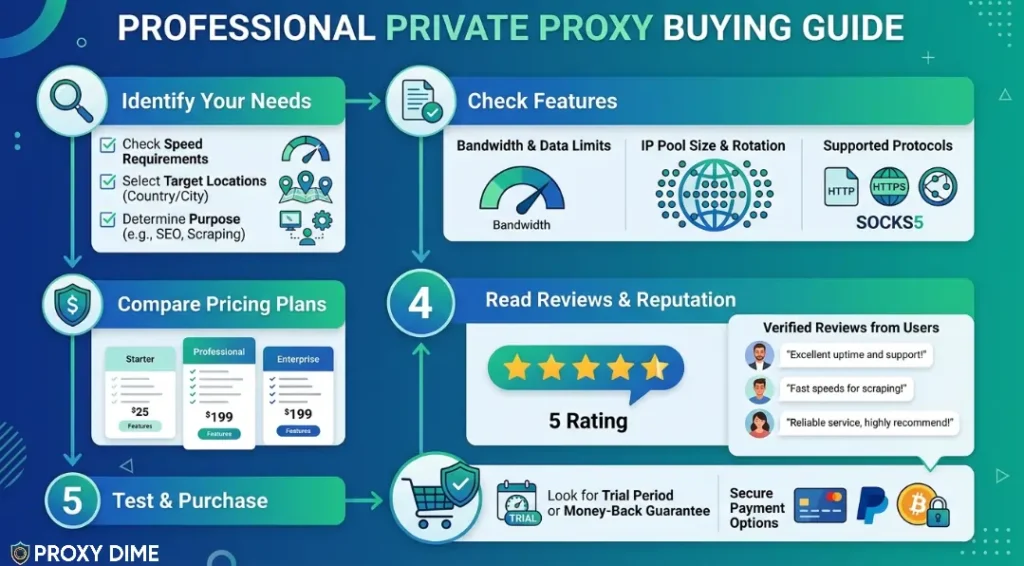
Choosing a private proxy is not just about finding the lowest price per IP. You need to align the IP's origin with your specific operational risk.
Assess the Target's Security: If you are scraping Amazon or managing Facebook accounts, private datacenter proxies will likely fail. You need private ISP or static residential IPs (like Decodo or Thordata) to pass the initial ASN trust checks.
Determine the Session Lifespan: Do you need an IP for a 5-minute scrape or a 5-year account history? If it is the latter, prioritize providers like Decodo that guarantee IP persistence upon renewal.
Calculate Concurrency Needs: Shared proxies throttle your simultaneous connections. If you are running high-velocity scraping, ensure your private proxy provider (like Oxylabs) offers unlimited concurrent threads.
Evaluate Location Granularity: If you are verifying localized ads in Munich, a generic “German” IP might not cut it. Look to Proxy-Seller or Bright Data for deep city-level targeting.
✨Frequently Asked Questions About Private Proxies
What is a private proxy?
A private proxy (or dedicated proxy) is an IP address assigned exclusively to a single user for a specified duration. Unlike shared proxies, no other customer can route traffic through that IP, ensuring maximum speed, heightened privacy, and a clean IP reputation.
How do private proxies differ from VPNs?
While both hide your IP, a VPN encrypts all traffic from your device at the operating system level. A private proxy works at the application level (like a specific browser or scraper) and does not inherently encrypt traffic unless configured with HTTPS/SOCKS5. Proxies are generally faster for automated, high-volume tasks.
Which is better: private datacenter or private ISP proxies?
It depends on the task. Private datacenter proxies are cheaper and incredibly fast, making them ideal for scraping unprotected sites. Private ISP proxies cost more but carry the high trust score of a residential internet provider, making them essential for account creation, social media management, and bypassing anti-bot systems.
Why do some websites block my private proxy?
Even if you are the only one using the IP, the website's security system may detect that the IP belongs to a known datacenter ASN (like AWS or DigitalOcean) rather than a residential ISP. Many platforms block all datacenter traffic by default to prevent botting.
Can I change my private proxy IP if it gets banned?
Most premium providers like Webshare, Proxy-Seller, and Rayobyte offer IP replacement options. Some allow a free refresh every billing cycle, while others charge a small fee to swap a burned dedicated IP for a clean one.

More Guides On Proxy Dime
📌 Final Thoughts
The era of relying on cheap, shared IP lists for serious digital operations is over. The platforms are too smart, and the cost of a banned account is too high. If your business model relies on persistent, trusted identities—whether for e-commerce, ad management, or SEO—investing in private proxy providers is non-negotiable.
For operators needing unshakeable account stability, Decodo’s private ISP lines are the current benchmark. If you are a developer looking to build and test on a budget, Webshare’s modular pricing is the smartest entry point. And for enterprise-scale scraping where raw power matters most, Oxylabs’ dedicated datacenter infrastructure remains the heavy hitter.
👉 Which operational challenge is driving you toward private proxies right now?