ISP Proxy: The Hybrid That Defeats Both Speed and Detection Limits
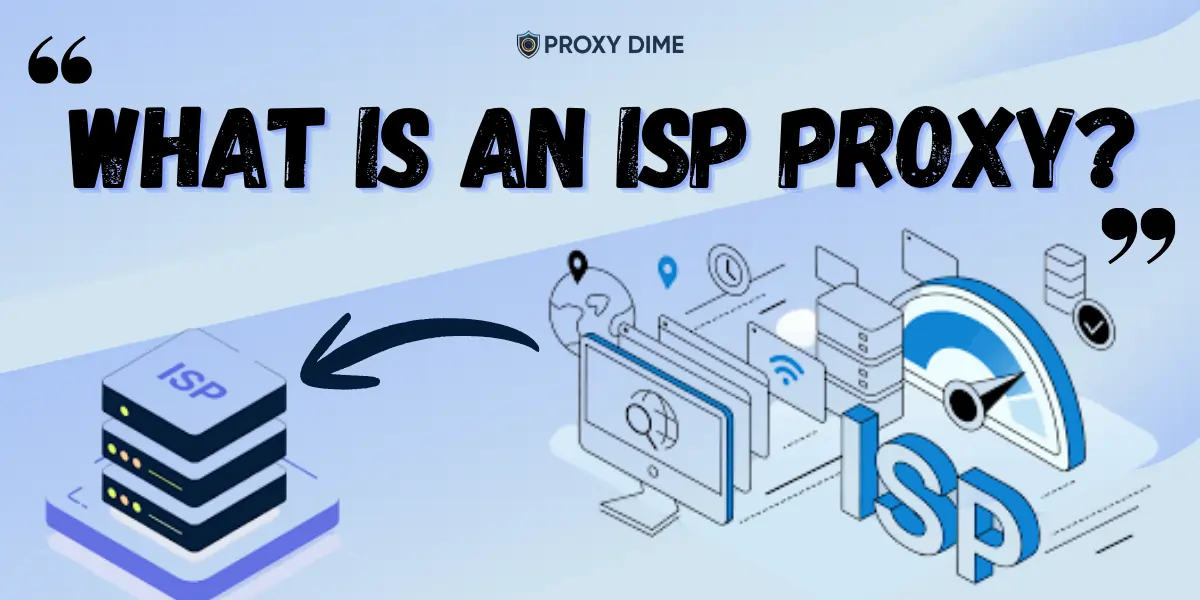
An ISP proxy — also called a static residential proxy or hosted residential proxy — is a purpose-built hybrid architecture that solves the fundamental trade-off in proxy selection: residential proxies are trusted but slow; datacenter proxies are fast but easily blocked.
ISP proxies break this trade-off by hosting IP addresses officially registered under real consumer Internet Service Providers (ISPs) on high-performance commercial data center hardware.
The result: the IP carries a residential Autonomous System Number (ASN) — such as Comcast (ASN 7922), AT&T (ASN 7018), British Telecom (ASN 2856), or Verizon (ASN 701) — while physically running on data center infrastructure capable of delivering 50–100 Mbps sustained throughput with enterprise-grade uptime.
Anti-bot systems performing ASN lookups see a consumer ISP and cannot wholesale-block it without locking out millions of legitimate residential users. Meanwhile, you get the performance of a datacenter proxy.
How ISP Proxies Are Created
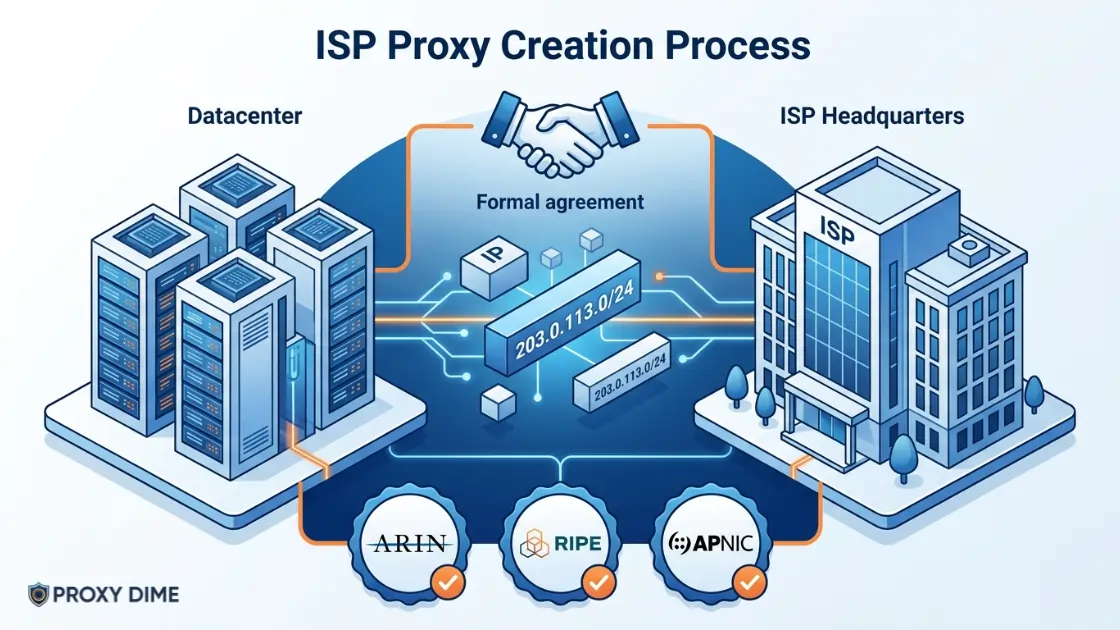
ISP proxies are created through formal IP lease or purchase arrangements between proxy providers and consumer ISPs. The provider acquires a block of IP addresses within the ISP's ASN — meaning the IPs are legitimately registered under that ISP in the ARIN, RIPE, or APNIC databases.
The physical server is hosted elsewhere (a datacenter), but all routing databases and WHOIS lookups return the ISP as the originating network. This arrangement is legal and commercially standard in the IP transit industry.
Real-World Performance Benchmarks (2025–2026)
Comprehensive benchmark testing across leading ISP proxy providers in 2025 revealed:
| Metric | ISP Proxy | Residential Proxy | Datacenter Proxy |
|---|---|---|---|
| Avg. Connection Speed | 50–100 Mbps | 10–50 Mbps (variable) | 100–1,000 Mbps |
| Latency Stability (48h) | ±5ms variance | ±23ms variance | ±2ms variance |
| Connection Drops (24h session) | 0 drops recorded | 4 drops avg. | <1 drop |
| Infrastructure Success Rate | 94.75–98.27% | 85–99% | 20–40% (protected) |
| Median Response Time | 0.42–0.46 seconds | 0.8–1.5 seconds | 0.1–0.3 seconds |
| Session Stability | Excellent — static IP | Variable — pool-based | Good — static option |
IPRoyal (500K IP pool) benchmarked at 94.75% infrastructure success rate, while Webshare (100K IP pool) reached 98.27% — demonstrating that smaller, more curated ISP proxy pools can outperform larger ones through aggressive IP health management.
Why Websites Cannot Block ISP Proxies at Scale
When Cloudflare, Akamai Bot Manager, or PerimeterX encounters a request from an ISP proxy, the ASN lookup returns Comcast (ASN 7922) or AT&T (ASN 7018).
Blocking these ASNs entirely would make the website unreachable for 30–80 million US households — a commercially catastrophic decision no business would make.
This structural immunity is permanent as long as ISP proxies remain registered under legitimate consumer ISP ASNs. It cannot be patched by anti-bot vendors without collateral damage to genuine users.
ISP Proxy vs Residential vs Datacenter: Complete Comparison
| Feature | ISP Proxy | Residential Proxy | Datacenter Proxy |
|---|---|---|---|
| IP Registration | Consumer ISP (residential ASN) | Consumer ISP (real home device) | Cloud/hosting provider ASN |
| Physical Host | Data center server | Real home/mobile device | Data center server |
| Speed | 50–100 Mbps | 10–50 Mbps | 100–1,000 Mbps |
| Latency Stability | High (±5ms) | Low (±23ms) | Very High (±2ms) |
| Success Rate (Protected Sites) | 94–98% | 85–99% | 20–40% |
| IP Assignment | Static — dedicated, never rotates | Rotating or static | Static or rotating |
| Session Persistence | Full — same IP indefinitely | Limited by rotation | Good — static option |
| Cost Model | $2–$5/IP/month | $2–$15/GB | $0.10–$0.50/IP |
| Best For | Long sessions, account mgmt | High-volume scraping | API testing, low-protection targets |
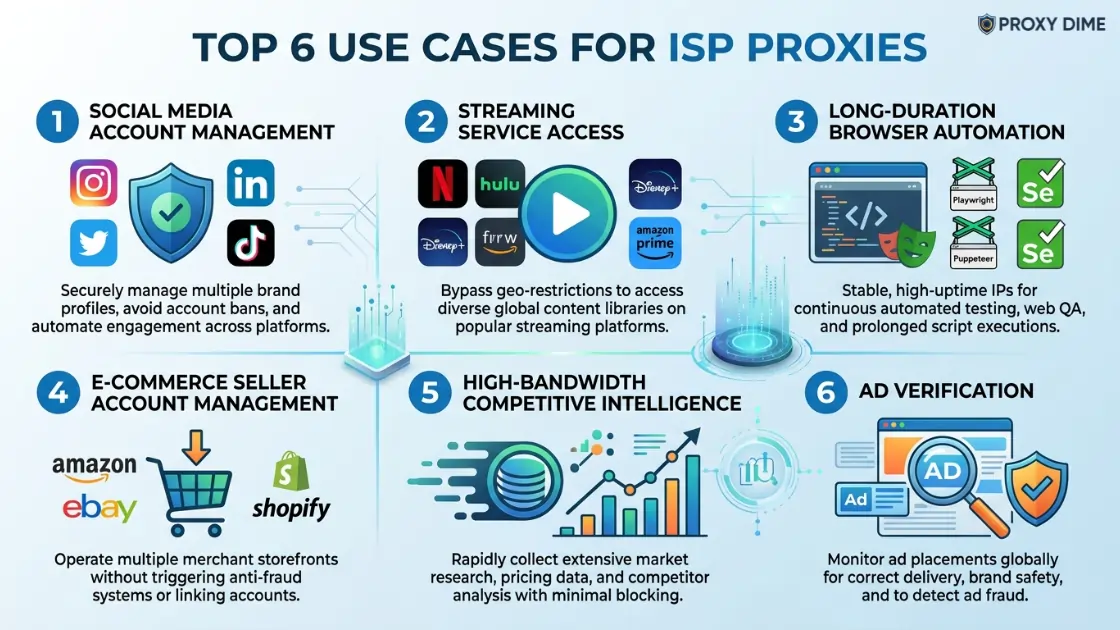
Top Use Cases for ISP Proxies
Pricing Landscape in 2026
ISP proxy pricing has stabilized into two primary models: per-IP/month (typically $2–$5 per IP for shared pools, $5–$15 for dedicated IPs) and bandwidth-based billing ($3–$8/GB).
Dedicated ISP proxies — where one IP is exclusively assigned to one customer — carry a premium but eliminate the risk of shared-IP reputation degradation from other users' behavior.
For account management tasks where IP reputation is critical, dedicated ISP proxies are the recommended choice despite higher cost.