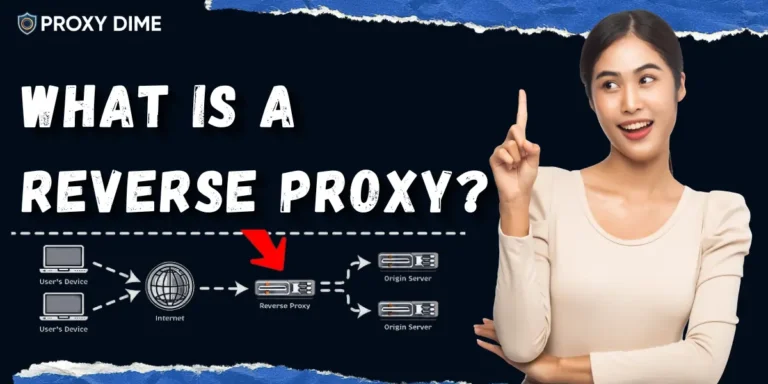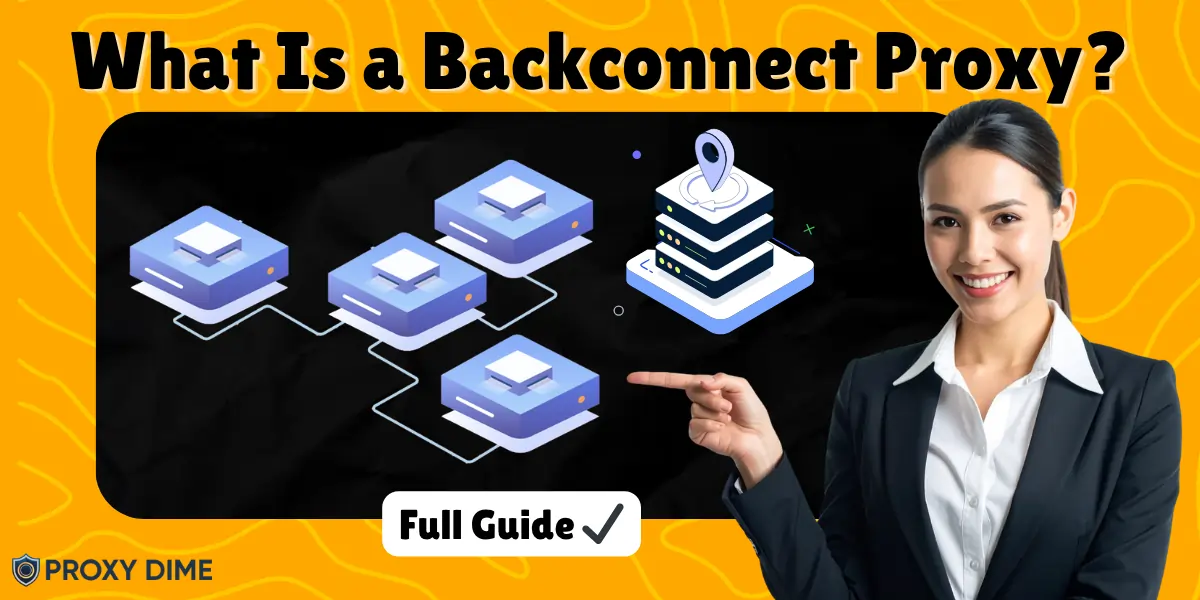
A backconnect proxy — also called a gateway proxy or rotating gateway proxy — is a server architecture where all outbound traffic flows through a single entry-point gateway (one IP:port pair), while the system automatically rotates through a massive pool of backend exit IPs with each request.
From your code's perspective, you always connect to the same endpoint. What changes invisibly is which IP address the destination website actually sees — a fresh one from the provider's pool on every request.
This architecture is the operational backbone of modern large-scale web scraping, data collection, and automation infrastructure.
It separates the complexity of IP rotation management from your application code entirely — you write one proxy endpoint into your scraper, and the backconnect system handles all IP selection, health monitoring, geo-targeting, and pool management server-side.
How Backconnect Proxy Work: Technical Architecture
The backconnect system operates through four layers working in sequence:
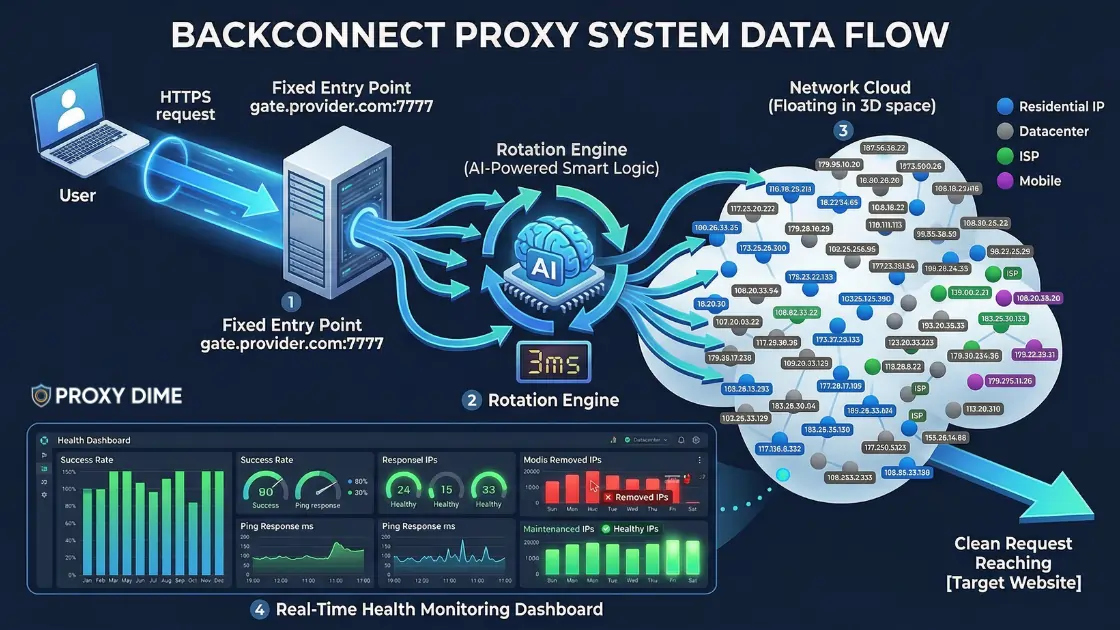
This four-layer architecture means the gateway IP is never exposed to target websites — only exit node IPs are. The gateway itself can be protected, rate-limited, and authenticated without affecting the anonymity of the exit node pool.
Pool Sizes: What Leading Providers Offer in 2026
| Provider | Pool Size | Countries | IP Types Available |
|---|---|---|---|
| Bright Data | 150M+ IPs | 195+ | Residential, ISP, Datacenter, Mobile |
| Oxylabs | 100M+ IPs | 195+ | Residential, ISP, Datacenter, Mobile |
| Smartproxy | 55M+ IPs | 195+ | Residential, ISP, Datacenter |
| SOAX | 155M+ IPs | 195+ | Residential, Mobile |
| IPRoyal | 32M+ IPs | 195+ | Residential, ISP, Datacenter |
| Webshare | 30M+ IPs | 195+ | Residential, ISP, Datacenter |
| Decodo (Smartproxy) | 40M+ IPs | 195+ | Residential, ISP, Datacenter |
Session Modes: Request-Level vs Sticky Rotation
Backconnect proxies offer two primary session modes that determine how often exit IPs change:
Backconnect Proxy vs Traditional Rotating Proxy List: Key Advantages
| Feature | Backconnect Proxy | Traditional Proxy List + Manual Rotation |
|---|---|---|
| Integration complexity | One endpoint in your code | Proxy list management + rotation logic required |
| Pool management | Fully automated server-side | Manual — you maintain and refresh the list |
| Failed IP handling | Auto-removed in milliseconds | Manual removal after detecting failures |
| Pool size | Millions of IPs instantly | Limited by what you can maintain |
| Geo-targeting | URL parameter or header-based | Manual list segmentation by geo |
| IP health monitoring | Continuous automated scoring | Manual testing required |
| Uptime risk | Provider SLA-backed | Dependent on proxy list quality |
Geo-Targeting in Backconnect Proxies
Enterprise backconnect providers support granular geographic targeting through URL parameters or session headers. You can specify targeting at the country, state, city, and ASN level — for example, to pull search results as a user in Chicago on a Comcast connection.
This is critical for localized price intelligence, regional content verification, and compliance with geo-specific regulations. Most leading providers support city-level targeting across 5,000+ cities worldwide.
Anti-Bot Evasion: Why Backconnect Residential Proxies Win
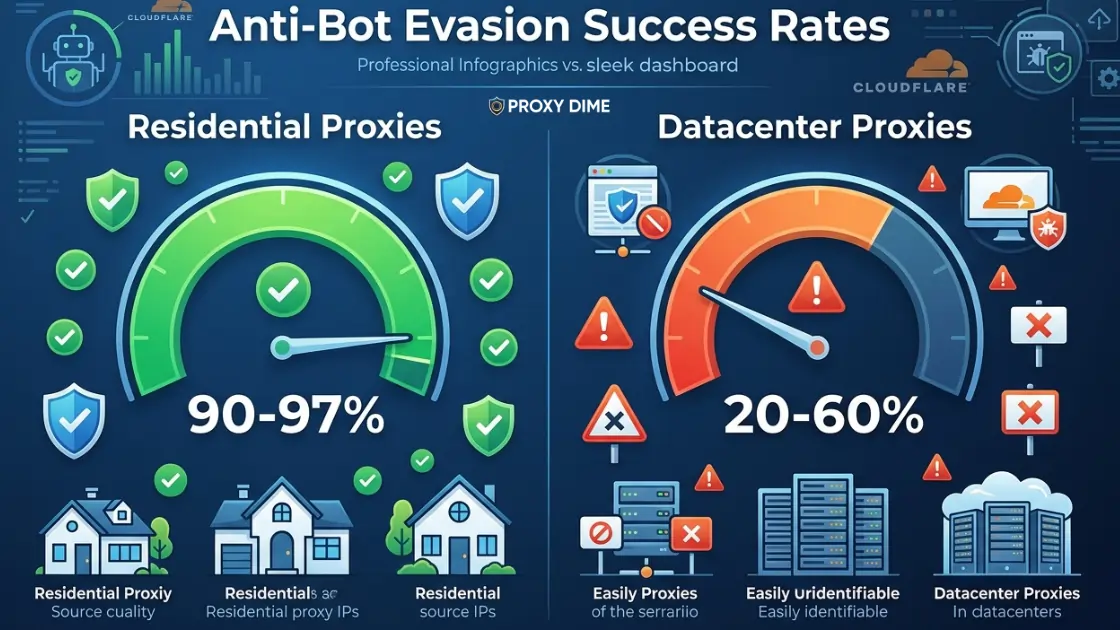
A backconnect proxy's effectiveness against anti-bot systems depends entirely on the exit IP pool type. Backconnect residential exit pools achieve 90–97% success rates on Cloudflare-protected targets because each request arrives from a different, legitimate residential IP that anti-bot systems cannot feasibly block.
Backconnect datacenter pools are cheaper but achieve only 20–60% success on well-protected sites. The gateway IP itself is never exposed to targets, so it cannot be blacklisted — all detection pressure falls on exit IPs, which are continuously recycled.
Top Use Cases for Backconnect Proxies
Pricing Models in 2026
Backconnect proxy pricing is primarily bandwidth-based for residential pools: $3–$12/GB for residential backconnect, $1–$3/GB for datacenter backconnect. Enterprise contracts for 10TB+/month typically unlock discounts of 40–60% off list pricing.
Some providers offer request-based pricing for scraping-specific plans ($0.001–$0.003 per successful request), which aligns cost directly with outcomes rather than raw bandwidth consumption.