IP Origin: The Single Factor That Determines Everything
Every proxy IP has a traceable origin — the organization that assigned it and the infrastructure it runs on. Anti-bot systems like Cloudflare, Akamai Bot Manager, and PerimeterX all perform ASN (Autonomous System Number) lookups as their first detection step.
The ASN tells the system who assigned the IP and what kind of device or organization it belongs to. This is why the distinction between residential and datacenter IPs is not cosmetic — it is the core technical variable that determines whether your request succeeds or gets blocked.
Residential Proxies: Performance Profile
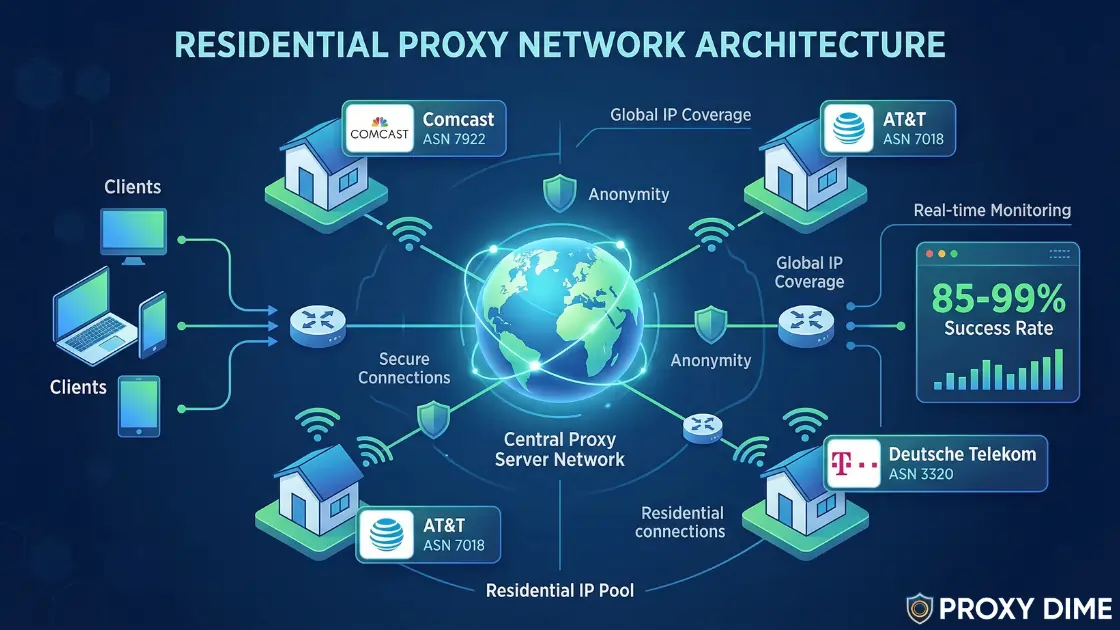
Residential proxies carry ASNs belonging to consumer ISPs — Comcast (ASN 7922), AT&T (ASN 7018), Deutsche Telekom (ASN 3320), and thousands of regional providers. Blocking these ASNs would deny access to millions of legitimate households — an untenable outcome for any commercial website.
This structural protection drives residential proxy success rates to 85–99% on heavily protected platforms. Per 2025 industry benchmarks: premium residential providers maintain 97–99% success rates, while standard services deliver 92–96%.
Datacenter Proxies: Performance Profile
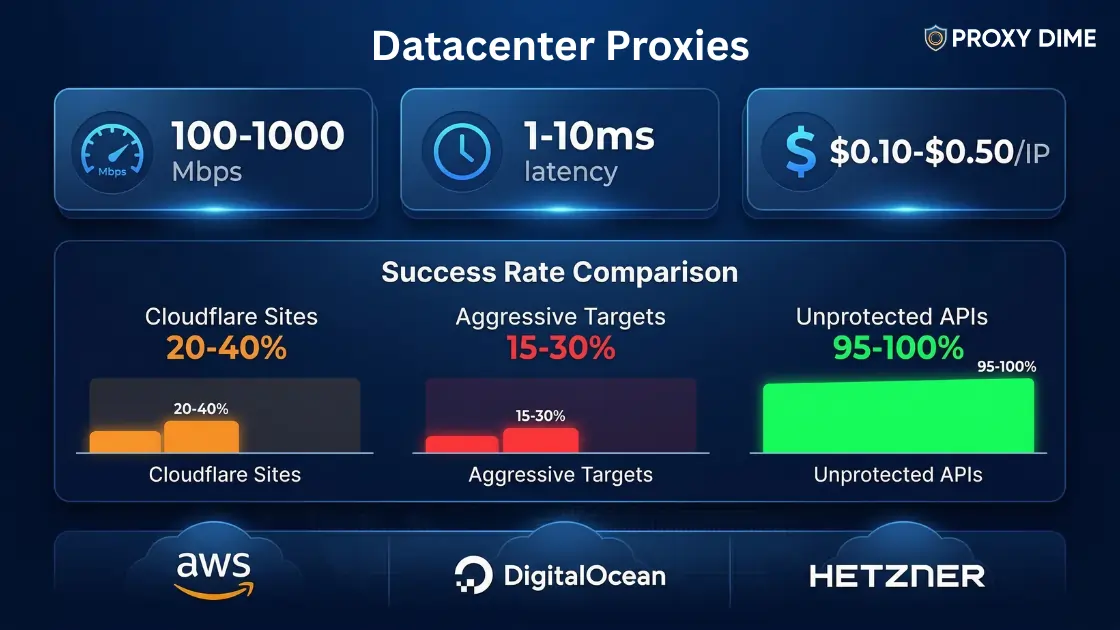
Datacenter proxies originate from cloud infrastructure ASNs — AWS (AS16509), DigitalOcean (AS14061), Hetzner (AS24940). These are extensively catalogued in IP reputation databases like MaxMind and IPinfo. Modern anti-bot systems flag datacenter ASNs before even analyzing request behavior.
Success Rate Benchmarks by Target Type
| Target Type | Residential Success Rate | Datacenter Success Rate |
|---|---|---|
| Basic/unprotected websites | 99%+ | 99%+ |
| Standard e-commerce | 95–98% | 60–80% |
| Cloudflare-protected sites | 90–96% | 20–40% |
| Social media platforms | 85–95% | 10–30% |
| Streaming services | 80–95% | 5–20% |
| Sneaker/limited-edition retailers | 75–90% | 5–15% |
ROI Analysis: When Residential Proxies Win Despite Higher Cost
For a project requiring 10,000 successful requests on a Cloudflare-protected e-commerce site: With residential at $8/GB and 95% success rate — cost per successful request ≈ $0.008–$0.01.
With datacenter at $0.30/IP but 30% success rate — you need ~3.3x more total requests to achieve the same output. The retry overhead and bandwidth waste close the cost gap substantially. Companies running protected-target scraping report 3x better ROI with residential proxies despite higher sticker prices.
The Hybrid Option: ISP Proxies
ISP proxies (static residential proxies) combine residential ASN trust with datacenter hardware performance. They achieve 94–98% success rates at 50–100 Mbps — the best of both worlds.