Anonymous Proxy Is Not Binary — It's a 3-Level Spectrum
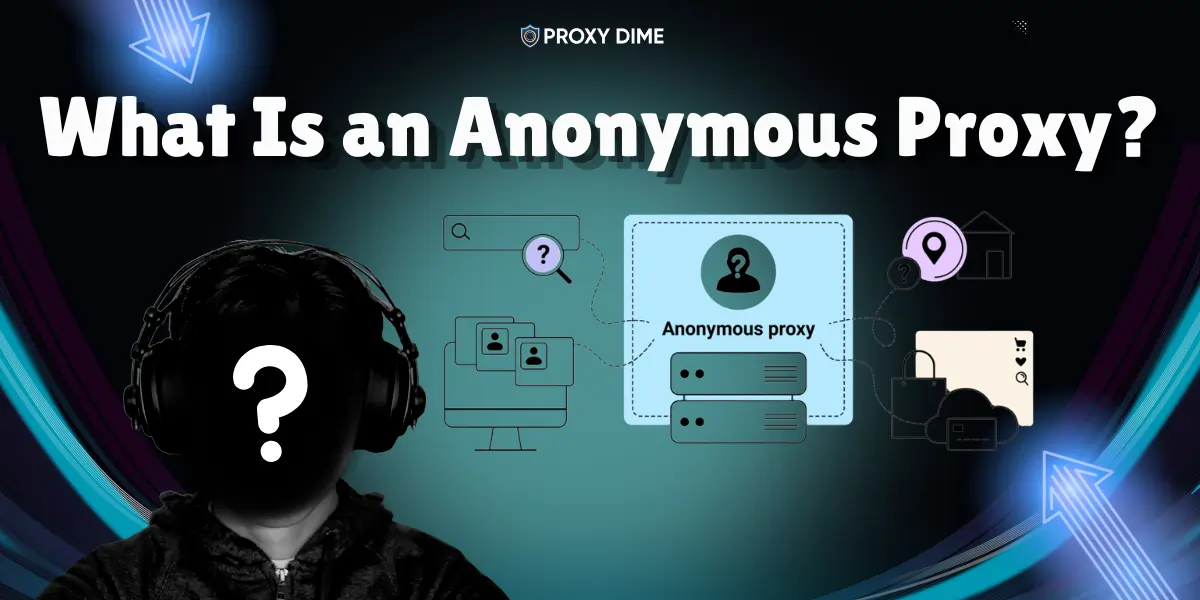
When most people say ‘anonymous proxy' they assume it means complete invisibility. Technically, it means something more specific: a proxy that hides your real IP address but still signals to the destination server that a proxy is in use.
True anonymous proxies sit at Level 2 of a three-tier anonymity system defined entirely by which HTTP headers the proxy exposes to the destination server.
The 3 Anonymity Levels: Technical Header Breakdown
| Level | Name | REMOTE_ADDR | HTTP_VIA | HTTP_X_FORWARDED_FOR | What Website Sees |
|---|---|---|---|---|---|
| Level 3 | Transparent | Proxy IP | Present (proxy software/version) | Your real IP | Your real IP + proxy in use |
| Level 2 | Anonymous | Proxy IP | Present (proxy software) | Absent or proxy IP | Proxy IP; knows proxy used |
| Level 1 | Elite (High-Anonymous) | Proxy IP | Stripped/absent | Stripped/absent | Only proxy IP — looks direct |
ProxyMesh's technical documentation confirms: Elite Level 1 proxies strip all identifying headers so that ‘the server cannot even detect that the connection was made through a proxy.'
The headers removed include HTTP_VIA, HTTP_X_FORWARDED_FOR, HTTP_FORWARDED, HTTP_PROXY_CONNECTION, and HTTP_CACHE_CONTROL.
How Anonymous Proxies Are Detected (Despite Hiding Your IP)
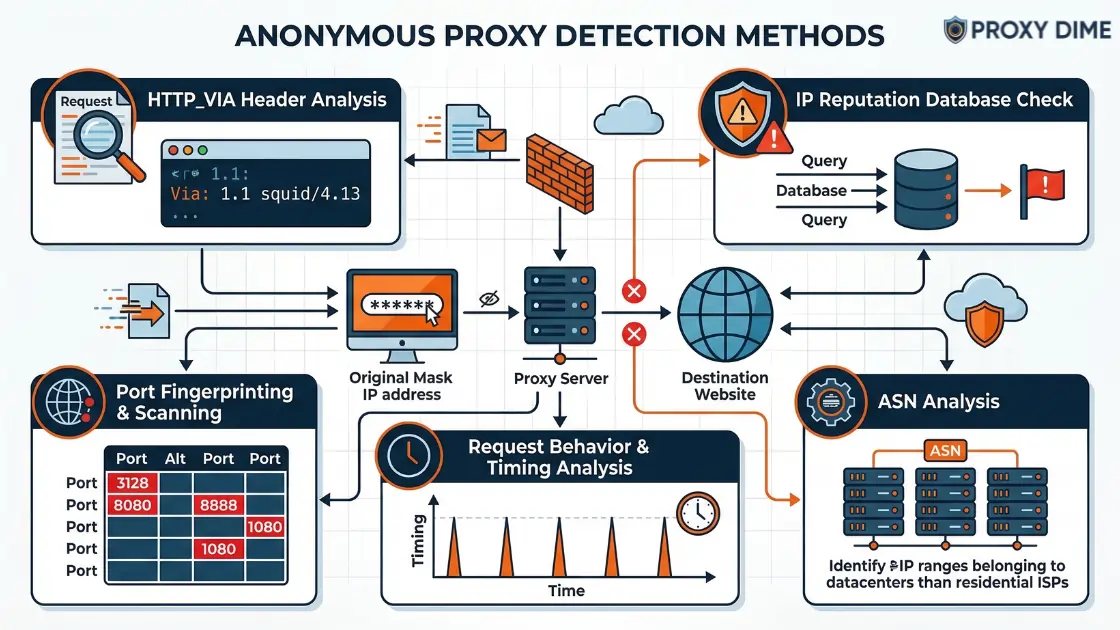
Level 2 anonymous proxies hide your IP but are still identifiable through multiple vectors:
Free proxies are approximately 90%+ detected by modern anti-bot systems. Most free proxy lists provide only Level 2 or Level 3 proxies. For any serious operation, Level 1 Elite residential proxies are the required standard.
Anonymous Proxy vs Elite Proxy: When Does the Difference Matter?
Anonymous Proxy vs Transparent Proxy
A transparent proxy (Level 3) is the opposite of what most users want — it reveals your real IP via X-Forwarded-For and announces proxy use. It provides zero privacy protection. Transparent proxies are deployed by network administrators for monitoring and filtering, not for user anonymity.